


Best Flooring for Basements: 2026 Guide for Iowa Homeowners

Imagine waking up to a heavy Iowa thunderstorm and feeling that familiar knot in your stomach as you head downstairs to check the basement. You want a space that feels like a cozy retreat, yet you're constantly worried about moisture seeping through the concrete or the chill of a Midwest winter. Choosing the best flooring for basements shouldn't feel like a gamble against the weather. You deserve a floor that stays warm underfoot, looks high-end, and stands up to the unique humidity challenges we face here in the Des Moines area.
At Strother Built Construction, we've spent over 13 years helping local families transform these underground spaces into vibrant living areas that last for decades. This 2026 guide cuts through the confusion surrounding luxury vinyl plank, tile, and laminate to show you exactly what works in an Iowa home. We will explore the most durable, moisture-resistant materials and explain why the right subfloor system is the secret to a basement that stays dry and inviting for 20 years or more. From professional prep to final design, you'll learn how to choose a surface that balances style with total peace of mind.
Table of Contents
The Iowa Basement Challenge: Why Your Flooring Choice Starts with Moisture
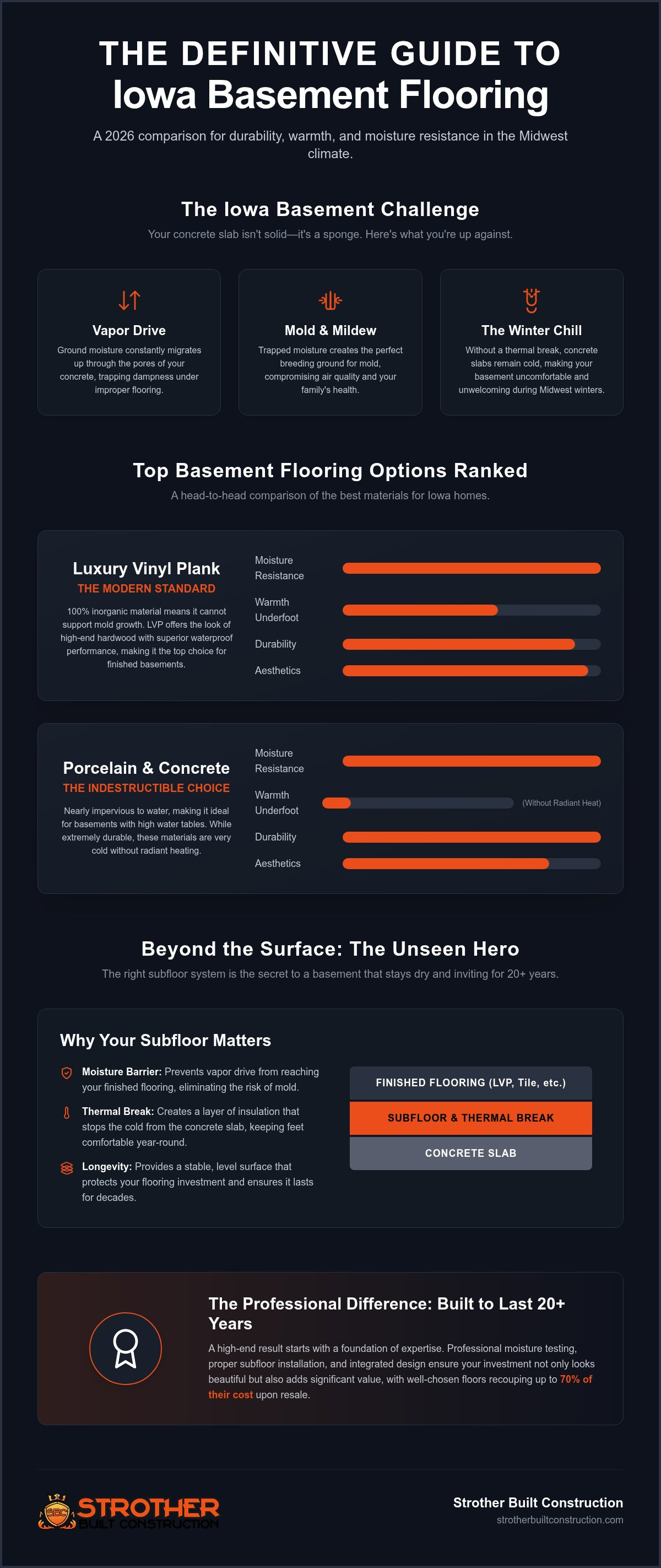
Iowa basements face a constant battle with the elements. While your concrete slab looks solid, it actually behaves like a dense, heavy sponge. Ground moisture continuously migrates through the pores of the concrete in a process called vapor drive. If you install the wrong material, this moisture gets trapped, creating a perfect breeding ground for mold and mildew. Finding the best flooring for basements starts with understanding how your specific home breathes. Test your slab first. Don't skip the prep.
Our local climate in Des Moines adds another layer of complexity. High summer humidity and seasonal shifts in the water table mean your basement air quality is directly tied to your floor. Additionally, many Iowa homes require radon mitigation systems to maintain safety. These systems rely on proper airflow and sealing, so your flooring choice must work in harmony with these structural requirements. Basement design and structural considerations often dictate which materials will actually survive the long haul in our region. A floor that blocks airflow can inadvertently interfere with your home's health.
Identifying Your Basement's Moisture Level
Before you fall in love with a specific style, assess your current conditions. A simple "Plastic Sheet Test" involves taping a two-foot square of clear plastic to the floor for 48 hours. If condensation forms under the plastic, you have a moisture issue that needs addressing before installation. You should also look for efflorescence, which is a white, powdery mineral deposit left behind by evaporating water. If you notice damp smells or visible dark spots, it's time to call a professional for a calcium chloride or in-situ probe test. We handle this technical prep for our clients to ensure the foundation is ready for a new finish.
The Difference Between Waterproof and Water-Resistant
Don't let marketing labels mislead you during your search. A "waterproof" luxury vinyl plank might be impervious to a spilled drink, but it won't stop moisture from damaging the concrete underneath. Water-resistant materials are designed to handle topical moisture for a short time. In contrast, truly waterproof materials won't warp even when submerged. However, neither can withstand heavy hydrostatic pressure on their own. Hydrostatic pressure is the force exerted by groundwater against your basement foundation, often increasing during heavy Iowa rainstorms. Choosing the best flooring for basements requires a strategy that manages this pressure through proper drainage and subflooring rather than just picking a box with a "waterproof" sticker.
Ranking the Best Flooring for Basements: A 2026 Comparison
Choosing the best flooring for basements requires balancing high-end aesthetics with the harsh realities of the Midwest. You need a surface that feels warm in February but won't warp during a humid July. While engineered hardwood offers incredible beauty, it often struggles with the moisture levels inherent in Iowa soil. Instead, focus on materials that offer a high cost-to-value ratio and long-term durability. A well-chosen floor can recoup up to 70% of its cost upon resale in the Des Moines market, making this a smart investment for your home's future.
Luxury Vinyl Plank (LVP): The Modern Standard
LVP has become the dominant choice for basement finishing Des Moines homeowners prefer. It is entirely inorganic, which means it won't support mold growth even if vapor drive becomes an issue. For 2026, we're seeing a shift toward extra-wide planks and light, natural oak textures. These styles brighten up underground spaces and mimic authentic wood grain with startling accuracy. It's the perfect mix of waterproof performance and visual warmth. If you want the look of a luxury main floor in your basement, LVP is the clear winner.
Porcelain Tile and Polished Concrete
If your home sits on a high water table, porcelain tile and polished concrete are nearly indestructible. They handle moisture better than any other option on the market. However, these materials are notoriously cold underfoot. We always recommend installing electric radiant heating coils beneath tile to combat Iowa's freezing winters. This simple addition transforms a cold slab into a cozy retreat. If you're still diagnosing and solving moisture problems, these dense, non-permeable options provide the most peace of mind against future flooding.
The Carpet Controversy: Is it Ever Okay?
Many families crave the softness of carpet for home theaters or kids' play areas. You can make it work, but you must follow the "low-pile" rule. Berber or commercial-grade carpets are superior to plush shag because they don't trap as much humidity. Choose synthetic fibers like polyester or nylon. These materials naturally resist mildew and dry much faster than wool. For high-traffic zones, consider high-quality carpet tiles. They allow you to replace a single stained or damp section without tearing up the entire room. Our interior design services can help you coordinate these textures to ensure your basement feels like a seamless extension of your home.
Beyond the Surface: The Critical Role of Subfloors and Underlayments
Even the best flooring for basements can feel like a sheet of ice during an Iowa January without a proper thermal break. This layer acts as a vital buffer between the cold concrete slab and your living space. Think of it as insulation for your floor. A high-quality subfloor system doesn't just manage temperature; it also provides essential structural support. Without it, click-lock vinyl planks often produce a hollow, clicking sound that feels cheap and unstable. A solid subfloor creates the firm, quiet walk you expect in a high-end home.
The anatomy of a professional installation follows a specific order: Slab, Vapor Barrier, Subfloor, and finally, your Finish material. While standard foam underlayments are common, raised subfloor panels like DriCore offer superior protection. These panels create a small air gap that prevents minor moisture from reaching your flooring material. This gap is essential for the long-term health of your home because it allows the concrete to breathe without ruining your investment.
Vapor Barriers and Moisture Membranes
Moisture is your biggest enemy in any underground project. We recommend at least a 6-mil poly vapor barrier to block moisture from rising through the slab. For even better performance, dimpled membranes allow the concrete to breathe and dry out over time. This prevents stagnant water from trapping mold against the bottom of your floor. With the high water tables and clay-heavy soil found in Ankeny or Waukee, skipping a vapor barrier is a recipe for mold growth behind your baseboards. Protect your family's air quality by ensuring this invisible layer is installed correctly.
Insulated Subfloor Systems
Iowa heating bills can be staggering, and an uninsulated floor is a major source of heat loss. An insulated subfloor system increases the R-value of your floor, keeping the heat in your living space rather than letting it escape into the ground. You can choose between traditional sleeper systems or modern floating subfloors. Sleeper systems involve building a small wooden frame, while floating panels simply lock together over the membrane. Regardless of the system you choose, leveling the concrete is the most critical step. If your slab has dips or humps, your subfloor will bounce and eventually fail. We handle this technical prep, grinding down high spots and filling low areas, to ensure a perfectly flat foundation that DIYers often miss.
Matching Your Flooring to Your Basement’s New Purpose
Your basement shouldn't just be one large, open box. Most Iowa homeowners are carving out specific zones for work, play, and relaxation. The best flooring for basements depends entirely on how you plan to spend your time downstairs. An open-concept layout requires a cohesive design, but you can still use transitions to define different areas. Use a slim metal transition strip or a flush-mount threshold to move from a durable bar area to a soft lounge zone without creating a trip hazard. Explore these modern basement finishing ideas to see how different materials can work together to create a high-end look.
The Ultimate Entertainer: Bars and Home Theaters
For those building an adult retreat, durability is non-negotiable. Porcelain tile is the undisputed king around a basement bar because it handles spills and heavy barstools with ease. However, tile can make a home theater feel like an echo chamber. Sound bounces off hard surfaces, so a theater with only tile or polished concrete will sound harsh. We suggest using LVP for the main floor and adding thick area rugs to complement your acoustic wall panels. This multi-layered approach ensures your movie nights have theater-quality sound without sacrificing the moisture protection of your flooring.
Family Zones: Playrooms and Guest Suites
Playrooms and guest suites require a softer touch. High-end laminate has come a long way in 2026, offering a scratch-resistant surface that stands up to toys and pets. Modern versions feature tight-locking joints that resist surface spills much better than older products. For a luxury guest suite, waterproof engineered wood provides the genuine warmth of real timber. It creates an inviting atmosphere that makes visitors forget they're below ground level. Maintenance in these busy zones is simple if you choose a floor with a thick, 20-mil wear layer. Selecting the best flooring for basements means thinking about how each room functions daily. Schedule a design consultation to find the perfect match for your home's unique layout.
Designing Your Dream Basement with Strother Built Construction
Transforming your lower level into a high-end living space requires more than just picking a pretty sample from a showroom. It involves a deep understanding of structural integrity and local environmental factors. At Strother Built Construction, our design-build process takes the guesswork out of selecting the best flooring for basements. We don't just sell a service; we act as your local guide through the entire transformation. By integrating architectural design with interior expertise, we ensure your new floor flows seamlessly with the rest of your home's aesthetic.
Many homeowners underestimate the complexity of basement concrete. Professional installation is a vital long-term investment that prevents the common failures associated with DIY projects. We've spent over 13 years refining our approach to ensure every project stands the test of time. From technical moisture testing to precise leveling, we handle the foundational work that guarantees your finish stays beautiful for 20 years or more. Our team is dedicated to your personal satisfaction and the long-term value of your home.
Our Professional Installation Standards
A perfect finish starts with meticulous slab prep. We use industrial grinders to remove high spots and specialized fillers for low areas. This creates a dead-flat surface that eliminates the bouncing feel often found in amateur installations. Our team applies industrial-grade moisture mitigation barriers that far exceed standard retail options. This commitment to quality craftsmanship is why we offer a comprehensive guarantee on our work. You get peace of mind knowing your investment is protected against Iowa's unpredictable ground conditions and heavy seasonal rains.
From Flooring to Finish: The Whole Home Perspective
We believe a basement should never feel like an afterthought. Our goal is to create a space that feels like a natural extension of your upper floors. This requires careful planning of lighting, millwork, and layout to ensure the transition feels intentional and high-end. When considering your overall project budget, it's helpful to look at our guide on finished basement with bathroom cost to understand how flooring fits into the bigger picture of your renovation. We invite you to view our local portfolio of successful projects in Des Moines and Ankeny to see the Strother Built difference in person. Take the first step toward a beautiful, functional lower level. Schedule a consultation with our team today to find the best flooring for basements tailored specifically to your home’s unique vision.
Build Your Iowa Basement on a Solid Foundation
Your basement project is an investment in your home's value and your family's comfort. We've explored how the right subfloor system and moisture mitigation are just as important as the finish you see on top. A beautiful surface only lasts if the foundation beneath it is dry and stable. Don't overlook the technical prep that ensures your new living area remains a healthy, inviting part of your home for years to come.
The best flooring for basements isn't a one-size-fits-all solution. It's a tailored choice that balances Iowa's high humidity with your specific lifestyle needs. From waterproof vinyl to heated tile, your decision today determines how much you'll enjoy your space for the next 20 years. Don't let the technical details hold you back from the transformation you've imagined. You have the tools to choose a floor that stands up to the Midwest elements.
Take the stress out of your renovation by partnering with a team that understands local conditions. As an award-winning local contractor with 13+ years of Iowa remodeling expertise, we provide full-service design-build integration to ensure every detail is perfect. Start your Des Moines basement transformation with a Strother Built consultation today! We look forward to building something incredible together.
Frequently Asked Questions
What is the most durable flooring for basements over concrete?
Porcelain tile and professional-grade epoxy are the most durable options for concrete slabs. These materials don't warp or rot when exposed to moisture. In the Des Moines area, we often see homeowners choose tile for its longevity and resistance to heavy traffic. However, the best flooring for basements is only as durable as the preparation underneath. Grinding the concrete and applying a high-quality moisture barrier ensures these materials stay bonded for decades.
Can I install hardwood flooring in my Iowa basement?
Solid hardwood is usually not recommended for Iowa basements due to the high risk of warping and buckling from ground moisture. The fluctuating humidity in our region makes natural wood move too much. If you love the look of wood, waterproof engineered hardwood or luxury vinyl plank are much safer alternatives. These products offer the same aesthetic appeal but are engineered to handle the unique moisture challenges found below ground level.
Do I really need a subfloor if my basement is dry?
You should always install a subfloor even if your basement feels dry today. Concrete is porous and continuously releases water vapor that can get trapped under your finished floor. A subfloor creates a vital thermal break and allows for airflow, which prevents mold growth. It also makes the floor feel significantly warmer and softer underfoot. Skipping this step often leads to cold feet and potential moisture damage during heavy Iowa rainstorms.
What flooring should I avoid in a basement?
Avoid solid hardwood, bamboo, and thick shag carpets in any underground space. These materials are highly organic and absorb moisture like a sponge, which quickly leads to rot and mold. Laminate without a waterproof core is also risky because the edges can swell if they get damp. Stick to inorganic materials or products specifically rated for below-grade installation to ensure your best flooring for basements investment lasts for the long term.
Is luxury vinyl plank (LVP) better than tile for basements?
Luxury vinyl plank is often better for living areas because it feels warmer and is more cost-effective than tile. It mimics the look of wood without the risk of water damage. Tile is superior for flood-prone areas or utility rooms but requires radiant heating to feel comfortable in the winter. Most of our clients prefer LVP for its balance of comfort, style, and moisture resistance in multi-purpose family spaces.
How much does it cost to floor a 1,000 sq. ft. basement?
The cost to floor a 1,000 square foot basement varies based on the material selection and the level of slab preparation needed. Luxury vinyl plank, tile, and epoxy all have different price points for both materials and professional labor. You must also account for the cost of subfloor systems and moisture membranes. Factors like floor leveling and the complexity of your layout in Des Moines will influence the final investment required for a high-end finish.
Can I put carpet in a basement if I have a sump pump?
You can install carpet with a sump pump, but you must choose the right type. Stick with low-pile synthetic fibers like polyester or nylon that don't hold moisture. Avoid thick pads that act like sponges. A reliable sump pump is your first line of defense, but using a dimpled subfloor membrane underneath the carpet provides an extra layer of protection. This setup allows the concrete to breathe and prevents dampness from reaching the fibers.
How do I prevent mold from growing under my basement floor?
Preventing mold requires a combination of moisture barriers and humidity control. Always use a 6-mil poly vapor barrier or a dimpled membrane to separate your flooring from the concrete slab. This prevents vapor drive from trapping moisture against organic materials. Additionally, maintain your basement's relative humidity below 50 percent using a high-capacity dehumidifier. These steps, combined with professional slab prep, keep the environment under your floor dry and healthy year-round.


Comments