


Finding a Trustworthy Contractor in Des Moines Through Reviews

A certification badge is only one part of the picture. Finding a trustworthy contractor in Des Moines means checking Iowa registration and bonding, insurance, references, customer reviews, and how a contractor responds when concerns arise. A directory listing shows one certified company in one service category in Des Moines, represented by one roofing professional. Certification availability alone won’t answer every homeowner’s question.
Before inviting a contractor into your home, look for clear credentials and specific, positive feedback. This guide explains how to check Iowa contractor complaints, weigh reviews, and review written project terms. You’ll also learn how to assess communication and issue resolution, so you can make a more informed choice for your home project.
Table of Contents
Checking contractor licenses, insurance, and references
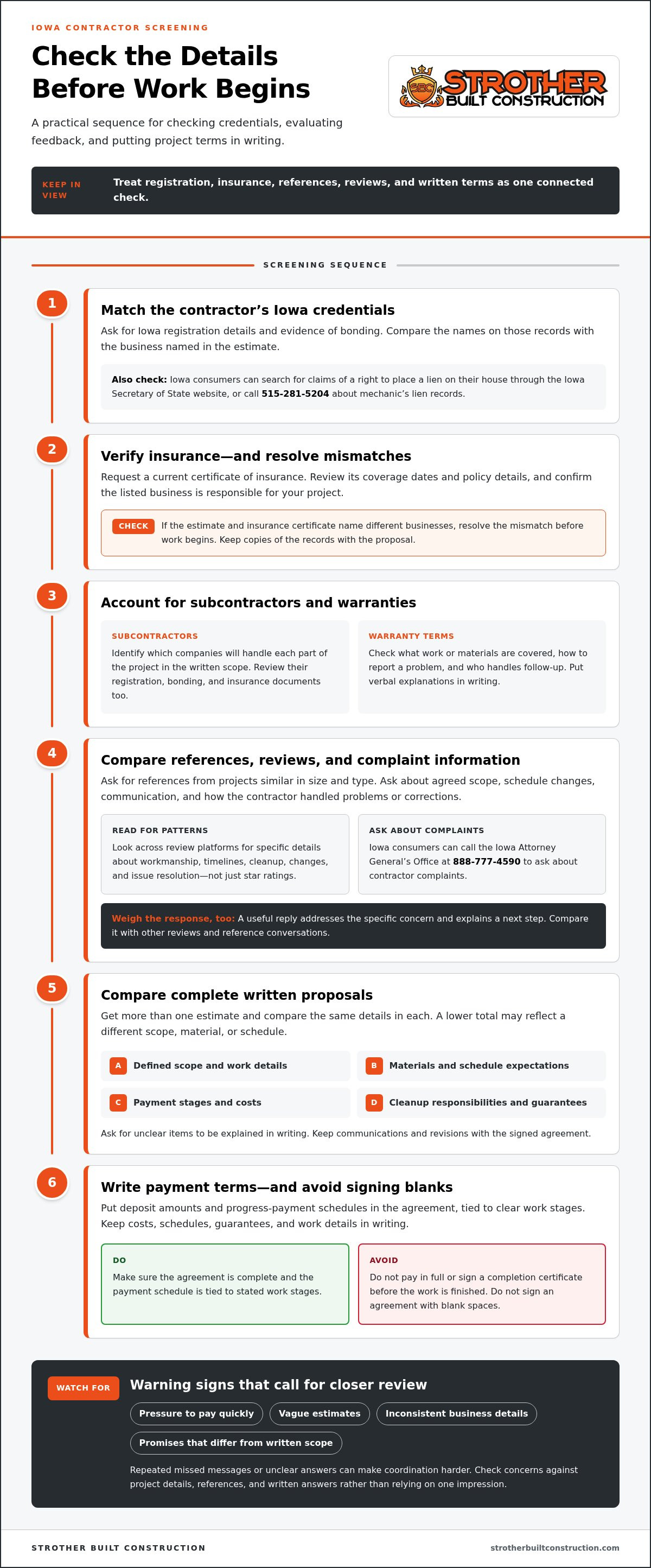
A dependable screening process looks beyond a polished estimate. In Iowa, check contractor registration and bonding, confirm insurance coverage, and speak with references before signing.
Put deposit amounts and progress-payment schedules in the written agreement, tied to clear work stages. Don’t pay in full or sign a completion certificate before the work is finished.
Iowa consumers can search for claims of a right to place a lien on their house through the Iowa Secretary of State website or call 515-281-5204 about mechanic’s lien records.
License and Insurance Verification
Ask for the contractor’s Iowa registration details and evidence of bonding, then check that the names match the business on the estimate. Request a current certificate of insurance and review its coverage dates and policy details. Confirm that the listed business is responsible for your project, not simply a similarly named company.
Keep copies of those records with the proposal. If the estimate names one business but the insurance certificate names another, resolve the mismatch before work begins.
Subcontractor and Warranty Checks
Ask which parts of the project subcontractors will complete and identify each company in the written scope. Review their registration, bonding, and insurance documents as you would for the primary contractor. This clarifies responsibility if separate crews handle tasks such as electrical work or finish installation.
Read warranty terms before signing. Note which work or materials they cover, how to report a problem, and who handles follow-up. Put any verbal explanation into the contract or another written project document.
Reference Checks
Request references for projects similar to yours in size and type, then contact those homeowners directly. Ask whether the finished work matched the agreed scope, whether the schedule changed, and how the contractor communicated during the project. Specific examples are more useful than general satisfaction.
Ask how the contractor handled a problem, such as a delayed delivery or a correction to completed work. A reference who can explain the response gives you a clearer picture of accountability than a review without project details.
Before accepting an estimate, compare its scope with the planned work. Check that it identifies materials, schedule expectations, payment stages, and cleanup responsibilities. Iowa consumers should keep costs, schedules, guarantees, and work details in writing. Don’t sign an agreement with blank spaces.
Get more than one estimate and compare the same details in each proposal. A lower total may reflect a different scope, material, or schedule, so identify what each estimate includes before weighing the figures. Keep communications and revisions with the signed agreement.
Customer reviews
Check reviews, references, and complaint history together. Search for repeated details about similar projects, then call the Iowa Attorney General’s Office at 888-777-4590 to ask about contractor complaints.
Reviews can show how a contractor communicates, manages changes, and responds after a project. Look beyond star ratings for specific descriptions of the work, timeline, cleanup, and handling of concerns. An account of a delayed cabinet installation, for example, tells you more than a short rating alone.
Compare feedback across review platforms and note when comments were posted. Look for patterns rather than treating one glowing review or angry post as conclusive. Several accounts mentioning unanswered messages or unfinished details deserve attention. Consistent comments about clear updates and resolved issues are useful context, too.
Ask for references from homeowners whose projects resemble yours, then compare those conversations with public reviews. Ask whether the final work matched the agreed scope, how changes were handled, and whether the contractor followed up on concerns. Specific examples help you assess the experience.
Response time during the inquiry and estimate stage can show how communication works before a contract. Note whether the contractor acknowledges your inquiry, answers your questions, and gives you a clear next step. A slower reply alone doesn’t prove poor work, but repeated missed messages or unclear answers can make coordination harder.
Review the estimate for a defined scope, materials, schedule, and payment stages. Compare estimates by what they include, not just the total. One proposal might leave removal or finishing work out, while another describes those tasks. Ask for unclear items to be explained in writing before deciding.
Warning signs include pressure to pay quickly, vague estimates, inconsistent business details, and promises that differ from the written scope. After a catastrophe, dishonest contractors may accept payment and fail to complete the job or show up. Others may use inferior materials or do shoddy work that isn’t up to code.
When a review describes a problem, look for the contractor’s response and the outcome. A useful response addresses the specific concern, explains the next step, and avoids hostility. Silence or a generic reply doesn’t settle the issue, so compare it with other reviews and reference conversations.
Keep a simple comparison note for each candidate: recurring review themes, reference feedback, complaint information, estimate clarity, and follow-up communication. This turns scattered impressions into a practical record. If accounts conflict, focus on verifiable project details and written answers rather than assumptions.
For another perspective while planning your project, explore home renovation planning ideas alongside your review research.
Contractor screening and credentials
Screen credentials as a connected set, not as isolated badges. In Iowa, check contractor registration and bonding, review insurance coverage, and compare each document with the business named in the proposal. Matching names help show that the company you’re considering is responsible for the work.
Iowa consumers can check contractor complaints with the Iowa Attorney General’s Office by calling 888-777-4590. Use that conversation as one part of screening, alongside references, reviews, and written project details. A complaint record needs context: note the concern, its date, and any stated resolution instead of relying on a label alone.
Build a simple credential record for each contractor you’re considering. Keep the business name, registration information, bonding evidence, insurance certificate, estimate, and reference notes together. If the estimate and insurance document use different business names, ask for a clear written explanation before moving forward. Consistent details make comparisons easier.
Registration and bonding: Compare the contractor’s business name across the proposal and registration details.
Insurance: Review the certificate’s named business and coverage dates.
Project scope: Match the written estimate to the work discussed.
Complaint history: Record what the Iowa Attorney General’s Office says and consider the surrounding details.
Credentials don’t describe every part of a project. Check whether the estimate clearly identifies the work, materials, schedule expectations, and payment stages. A proposal that says “renovate the room” leaves more room for disagreement than one listing specific tasks and finishes. Ask for unclear items to be written out before signing.
Use the same screening method for subcontractors named in the project plan. Ask which tasks they’ll handle and compare their business details with the project documents. If separate crews will complete different stages, a written description of responsibilities helps you understand who is doing each part and who to contact about a concern.
Review the agreement for blanks, conflicting names, and terms that differ from the estimate. Iowa homeowners should put costs, schedules, guarantees, and the work to be done in writing. Include start-time terms in the contract to clarify expectations. Keep a signed copy and any written revisions together.
Compare more than one estimate using the same checklist. A proposal with a different scope may not be directly comparable, even if its total looks attractive. Write down what each contractor includes, what remains unclear, and which credential details match. This helps ground your decision in evidence, not a single document or conversation.
Customer satisfaction and issue resolution
A contractor’s response to a concern can reveal how they handle accountability once work begins. Before signing, agree on a practical communication process: who receives questions, how changes are recorded, and how unresolved items are reviewed. Identify a project contact and keep decisions in writing so updates don’t get lost between conversations.
Ask references for a specific example of a problem and its outcome. Did the contractor acknowledge the concern, explain the next step, and follow through? A homeowner might describe a finish that needed correction. The useful detail is how the contractor assessed it and communicated the resolution, not simply whether the project had a snag.
Look for evidence that feedback reflects completed customer experiences. Best Pick Reports surveys thousands of recent customers through independent research firms to assess contractor satisfaction and quality. Treat that research as one input, then compare it with detailed reviews and direct reference conversations about similar projects.
Set up a simple issue record once work starts. Note the date, location, concern, relevant photos, and the contractor’s response. If a cabinet door doesn’t align or a finish differs from the agreed plan, describe the specific gap against the written scope. Share the record with the project contact and keep the reply with your project documents.
Agree on how changes and corrections will be approved. A clear written note can identify the affected work, proposed adjustment, and any schedule changes. If a selected material becomes unavailable, for example, document the replacement choice before installation. This creates a shared record and reduces disagreement about what was approved.
Escalate concerns in a measured sequence. Start with the person responsible for the project, state the issue plainly, and request a written plan for addressing it. If communication stalls, gather the agreement, messages, photos, and payment records before seeking guidance. The Iowa Attorney General’s Consumer Protection Division says Iowa consumers can call 515-281-5926 to file a complaint or get more information.
Use the same standard when evaluating past customer satisfaction. A strong account explains the work, the concern, the contractor’s response, and the outcome. A vague endorsement offers less practical insight. Compare several accounts, noting whether customers describe clear updates, respectful problem-solving, and follow-through after a correction.
Before the final walkthrough, compare completed work with the written scope and list any open items. Record each item and the agreed next step. Don’t sign a completion certificate before the work is finished. A documented closeout helps both sides see what remains and gives you a clear record of how outstanding concerns were handled.
Certified contractor availability in Des Moines
For homeowners finding a trustworthy contractor in Des Moines, certification is one useful signal, not the whole decision. The current listing shows one certified company in one service category, represented by one roofing professional.
For permits, required approvals depend on the renovation’s scope and the work involved. Describe the planned work to the City of Des Moines and ask which approvals apply before construction begins.
That limited listing matters because certification availability varies by category. A roofing credential doesn’t establish expertise in every kind of renovation. Match any certification to the work you need, then assess registration, bonding, insurance, references, reviews, and the written proposal. Each addresses a different part of the decision.
Read the certification criteria, not just the badge. Find out what the credential evaluates, such as customer feedback or trade-specific qualifications. Then compare that scope with your project. A credential related to one specialty may offer little evidence about another type of work.
Check the category: Confirm that the listed specialty matches your project.
Read the criteria: Understand what the certification assesses.
Compare credentials: Consider certification alongside registration, bonding, and insurance.
Review project fit: Look for relevant references and a clearly defined proposal.
When a directory lists few certified options, widen the evidence, not your standards. Compare candidates using the same written scope, and review their project examples, communication, and customer feedback. Certification is useful context, but it doesn’t replace checking whether a contractor’s experience aligns with your specific work.
Ask how the contractor approaches planning, sequencing, and coordination for a project like yours. A clear explanation should connect the proposed work to the finished result. A renovation involving several rooms, for example, needs a coherent scope and an understandable order of work, not unrelated tasks grouped together.
Keep your decision grounded in documents and examples. Compare proposals line by line, note differences in scope, and record questions about schedules or materials. Check that the business named in the agreement matches the credentials and insurance paperwork. This broader evaluation is central to finding a trustworthy contractor in Des Moines, especially when a directory offers only one match.
Use certification as a starting point, then judge the full record. Start planning your home project with a clear description of the changes you want.
Judge the fit through the scope of the work, relevant examples, and the documentation you can verify. Best Pick Reports lists 1 certified company across 1 service category in Des Moines, Iowa, and the Des Moines listing includes 1 roofing professional.
Treat those figures as a narrow snapshot, and assess each candidate against your project’s needs.
Strother Built Construction: Kitchen Remodeling
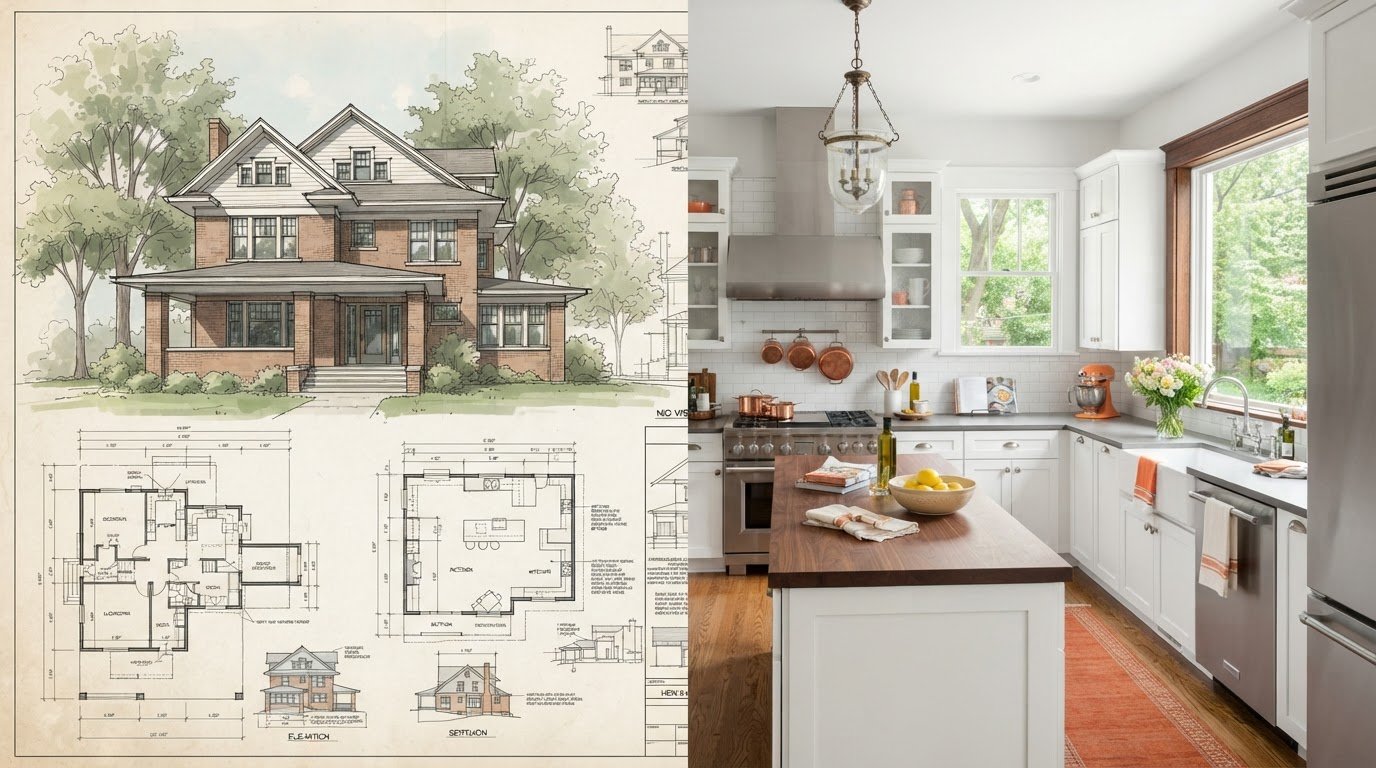
Strother Built Construction helps homeowners plan kitchen remodeling projects around their goals for the space. Turn to us when you’re ready to define a renovation scope and consider how design decisions work together. Our architectural design services can support project planning, while interior design can help guide the space’s look and feel.
Bring your priorities, practical needs, and ideas for the finished kitchen into the conversation. A clear starting point connects the design direction with the remodeling work. For broader home updates, Strother Built Construction also offers bathroom and basement remodeling.
Contact Strother Built Construction to discuss your kitchen remodeling plans and the changes you’d like to make.
Turn Your Home Plans Into a Clear Next Step
A renovation is easier to plan when you define what needs to change and how you want the space to work. Before moving ahead, write down your priorities, the improvements that matter most, and the questions you want answered during a project discussion. That preparation keeps the next conversation focused on your home and goals.
Finding a trustworthy contractor in Des Moines also means choosing a team whose work aligns with your project. Strother Built Construction offers kitchen, bathroom, and basement remodeling, giving homeowners a place to discuss updates to these spaces.
Bring your ideas for the finished room and the practical changes you need. A clear starting point can shape the project conversation, whether you’re updating one space or planning improvements across your home.
Contact Strother Built Construction today to discuss your renovation plans. Take the next step with a clear vision for a home that works better for you.
Frequently Asked Questions
How to verify a contractor’s license and registration in Des Moines, Iowa?
Ask for the contractor’s Iowa registration details and bonding information, then compare the business name with the estimate and agreement. Make sure the documents identify the same company you’re considering for your Des Moines project. Keep copies with your project notes. If the contractor uses different legal or business names across the paperwork, ask for a clear explanation before signing.
What insurance and bonding should a Des Moines contractor carry?
Ask for evidence of current insurance coverage and bonding, then check that the named business matches the company in your agreement. Review the coverage dates and policy information on the certificate. If subcontractors will work on your home, clarify who is responsible for their work and what documentation applies to them. Keep these records with your project paperwork.
Where to look up Iowa contractor complaints and disciplinary records?
For contractor complaints, Iowa consumers can call the Iowa Attorney General’s Office at 888-777-4590. For claims of a right to place a lien on a house, search through the Iowa Secretary of State’s website; you can also call 515-281-5204 about mechanic’s lien records. Complaints and lien records concern different issues, so consider each record in its proper context.
What should a written contractor estimate and contract include in Iowa?
Make sure the paperwork identifies the work, materials, total cost, schedule, guarantees, and payment stages. Specify which rooms and finishes are included rather than relying on a broad phrase such as “home renovation.” Include planned start-time terms, leave no blank spaces, and keep signed revisions with the agreement. Don’t pay in full or sign a completion certificate before the work is finished.
How many bids should homeowners get before hiring a contractor in Des Moines?
Get at least two estimates so you can compare the proposed scope, materials, schedule, and payment terms. Use the same project description for each request; otherwise, the bids may cover different work. Check whether removal, installation, and finishing tasks appear in both proposals. A lower total alone doesn’t show whether the estimates cover the same scope.


Comments