


Home Addition vs Moving in Iowa: Compare Cost and Value

A home addition vs. moving calculator for Iowa can help you compare an addition estimate with the costs of buying and moving. The lower-cost option depends on how much space you need and how well your current home still suits you.
It’s natural to focus on the construction budget, but the decision involves more than cost per square foot. Weigh the value of staying in a familiar location against the expense and effort of changing homes.
This guide explains what affects addition costs, how added space may influence resale value, and which expenses to include when comparing a project with a move. Use the figures as a starting point, then consider how each option fits your home, priorities, and plans.
Table of Contents
How much does room addition cost in Iowa in 2026?
A per-square-foot estimate compares construction cost with the addition’s finished floor area. These are planning ranges, not a complete comparison with buying another home.
Moving costs include more than the purchase price. Compare the new home’s housing costs with your current mortgage, taxes, upkeep, and relocation expenses. Housing affordability describes how comfortably ongoing housing expenses fit a household budget. Compare monthly costs alongside the one-time build budget, and include changes in commuting, school arrangements, or childcare. Education and childcare are family expenses tied to where you live and your daily schedule. A move can affect school access, travel time, and care arrangements, even when those costs aren’t part of the home purchase.
A frost line is the depth below ground where soil can freeze, and Iowa footings typically extend 42 to 60 inches below grade to reach it. Soil conditions can affect excavation and foundation work, so include foundation needs when comparing estimates.
Hidden costs are expenses beyond the basic construction estimate, such as permits, foundation work, or changes needed after opening existing walls. According to Iowa Division of Labor, contractor registration is required for anyone earning $2,000 per year from construction.
Use a home addition vs moving calculator for Iowa to organize comparable costs: enter the proposed addition size and estimate, then compare them with the purchase and moving costs of a suitable home. Treat the local example as a starting point, then weigh housing affordability and the space your household needs.
Room addition return on investment
Return on investment (ROI) compares a project’s financial return with its cost. For a home addition, resale recovery estimates how much of the project cost may be reflected in a later sale. Recovery estimates vary by project type, so one percentage cannot represent every addition. Use these figures as comparison points, not as a promise about a home’s future selling price.
Resale recovery is the estimated share of project cost recouped when the home sells. A master suite addition is estimated to recoup about 56% of its cost at resale, while a bathroom addition is estimated at about 54%. Garage conversions have an estimated return on investment of about 80%. These figures describe different project types, so compare like with like rather than treating them as interchangeable.
Everyday use value is the practical benefit a household gets from added space before selling. A larger bedroom may improve privacy, while a bathroom can ease busy morning routines. A garage conversion may create useful living space, but it also changes how the household uses that area. Consider who will use the addition, how often, and whether it meets a lasting need. Those benefits matter even when resale estimates don’t capture them.
To compare options, first identify the addition type and its estimated project cost. Next, apply the relevant resale recovery estimate to understand the potential financial return. Then weigh that return against the years of daily use the space could provide. Finally, compare the result with moving, including whether another home offers the layout and location your household wants. A practical addition design plan can help connect the new space with the way you live in your home.
Addition-versus-moving resource
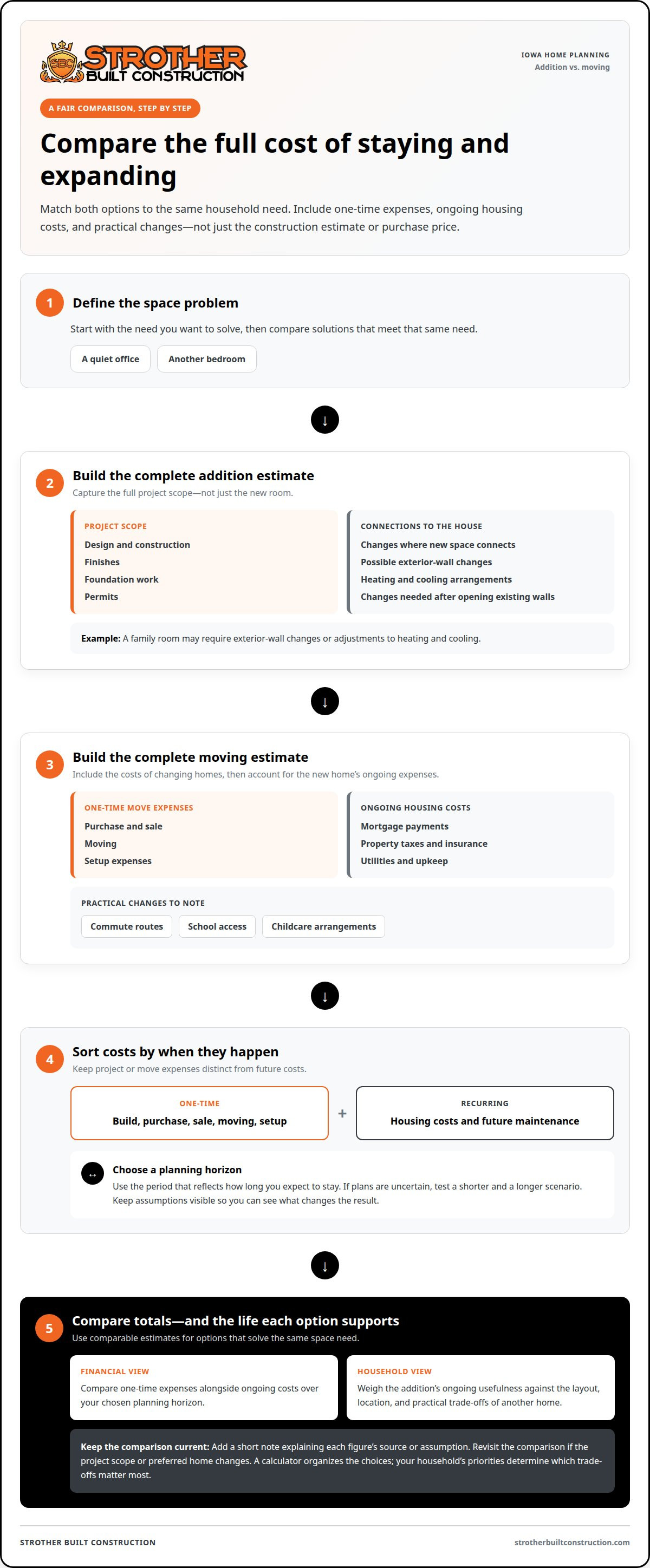
An addition-versus-moving comparison estimates the costs of staying and expanding against buying another home. A home addition vs. moving calculator for Iowa works best when both options reflect the same household needs and planning horizon. Start by defining the space problem, such as needing a quiet office or another bedroom. Then compare solutions that meet that need, rather than weighing a partial renovation against an entirely different home.
The addition column should capture the full project scope, not just the new room. Include design, construction, finishes, foundation work, permits, and changes where the new space connects to the existing house. For example, a family room may require changes to an exterior wall or heating and cooling arrangements. Separate one-time project expenses from future maintenance to keep the comparison clear.
The moving column should reflect the full cost of changing homes, not just the sale price. Include the purchase, sale, moving, and setup expenses, then compare ongoing housing costs such as mortgage payments, property taxes, insurance, utilities, and upkeep. A different home may also change commute routes, school access, or childcare arrangements. Record those practical changes alongside the financial figures.
A planning horizon is the period used to compare future costs and benefits. Choose one that reflects how long you expect to stay, then compare the addition’s ongoing usefulness with the costs of owning another home. If plans are uncertain, test more than one scenario, such as staying for a shorter or longer period. Keep assumptions visible so you can see what changes the result.
Use this sequence: list your space needs, gather comparable estimates, separate one-time costs from recurring costs, and compare the totals. Add a short note beside each figure explaining its source or assumption. Then revisit the comparison if the project scope or preferred home changes. A calculator organizes the choices; your household’s priorities determine which trade-offs matter most.
How long does a home addition take compared with buying and moving in Iowa?
A project timeline is the full span from early planning through a usable finished room. An Iowa home addition usually takes 3-8 months overall, while active construction covers only the on-site building period. A 200-square-foot, single-story family room is estimated to need about six weeks of active construction. The difference matters: design, approvals, scheduling, and finishing work extend beyond the time crews are building.
Plan review is the time a local building department takes to review submitted construction plans. In Des Moines and Cedar Rapids, building plan review usually takes 2-4 weeks. This is one planning stage, not the entire project schedule. Before that review, plans must be prepared; afterward, work still needs to be scheduled and completed. Organize drawings, project decisions, and material selections early to keep the sequence moving.
A home purchase timeline runs from choosing a property to moving in. Its pace depends on finding a suitable home, completing the purchase, and arranging the move. Buying doesn’t require building a new room onto your current house, but it does involve coordinating a sale or lease, packing, and setting up the new home. Compare the steps that apply to your situation rather than assuming one option always finishes sooner.
Use a shared calendar to compare both paths. For an addition, mark planning, plan review, active construction, and final setup as separate stages. For a move, list the home search, purchase steps, packing, and move-in tasks. Then identify which stages can overlap with work or family commitments. A 3-8-month addition schedule gives a useful planning frame, while the moving timeline should reflect the home and transaction you choose. Build flexibility into the calendar for decisions that affect the next stage, and compare when each option delivers the space you need.
Strother Built Construction: Kitchen Remodeling
Strother Built Construction helps homeowners consider whether reworking existing space may meet their needs better than adding a room or moving. If your kitchen feels cramped because of its layout, Kitchen Remodeling can reshape how the existing space works. If the challenge involves a broader floor plan, Architectural Design services can help develop a renovation direction around your home and priorities.
Choose a remodel when your main goal is improving how current rooms function. Consider a move or larger project when your household needs space the existing layout cannot reasonably provide. Strother Built Construction also offers Bathroom Remodeling and Basement Remodeling, which may address specific space needs within your home.
Explore the options that fit your home, then contact Strother Built Construction to discuss your project.
Choose the next step that fits your home
The right choice supports both your daily life and longer-term plans. Before deciding, write down what your home needs to do better: create a quieter place to work, make room for family routines, or improve how existing spaces connect. Then compare those priorities with the changes each option would bring. A home addition vs. moving calculator in Iowa can organize the financial comparison, but your ideal layout and attachment to your current location matter, too.
If staying feels right, focus your next conversation on the space you want to change and how you hope to use it. Strother Built Construction can help shape a remodeling direction around your home and goals. Share your project goals with Strother Built Construction and take a practical step toward a home that works better for you.
Frequently Asked Questions
Is It Cheaper to Build Out or Up in Iowa?
Building out is often less expensive per square foot than adding a second story, but the lot and project design affect the comparison. Building up can require structural work to support the added floor, while building out depends on available yard space, foundation needs, and your preferred layout.
How much does a home addition cost per square foot in Iowa in 2026?
The right comparison depends on what the estimate includes and the room’s purpose. A bedroom, bathroom, and family room have different requirements. Compare the same scope and finish level, then account for design, permits, foundation, and connections to the existing home.
What is the average cost to move to a larger home in Iowa, including selling and buying costs?
Moving costs depend on the home’s purchase price, the sale of your current property, financing, and relocation details. Build a personal estimate by listing sale preparation and transaction expenses, purchase-related costs, moving arrangements, and immediate updates needed in the new home. For example, a home that needs new flooring may bring added costs after move-in. Compare those expenses with the addition’s full project scope.
How can I compare the total cost of adding onto my Iowa home versus moving?
Compare both choices over the same expected time in the home. For an addition, total the project scope and likely ongoing upkeep. For moving, include the new home’s purchase and sale expenses, financing, relocation, and ongoing ownership costs. Then consider practical factors such as commute, school routines, and whether the new layout meets your needs. A home addition vs. moving calculator for Iowa can organize the two estimates side by side.
What are typical home addition costs in Des Moines and other Iowa cities?
Costs vary by project type, size, finish, foundation, and site conditions, so the city alone doesn’t determine an estimate. Use the local figure as a reference, not a statewide price for every addition. For another Iowa city, compare the same room type and scope rather than assuming the Des Moines figure applies.
How do mortgage rates, closing costs, and real estate commissions affect moving costs in Iowa?
Mortgage rates affect the interest paid over time and the monthly payment on a new loan. Closing costs add transaction expenses, while real estate commissions affect proceeds from selling a home. To compare moving with an addition, include each item in the moving estimate and distinguish upfront expenses from ongoing mortgage payments. The home price, loan terms, sale arrangement, and transaction details shape the total.

Comments