


Home Remodeling Payment Schedule: Fair Installments and Terms

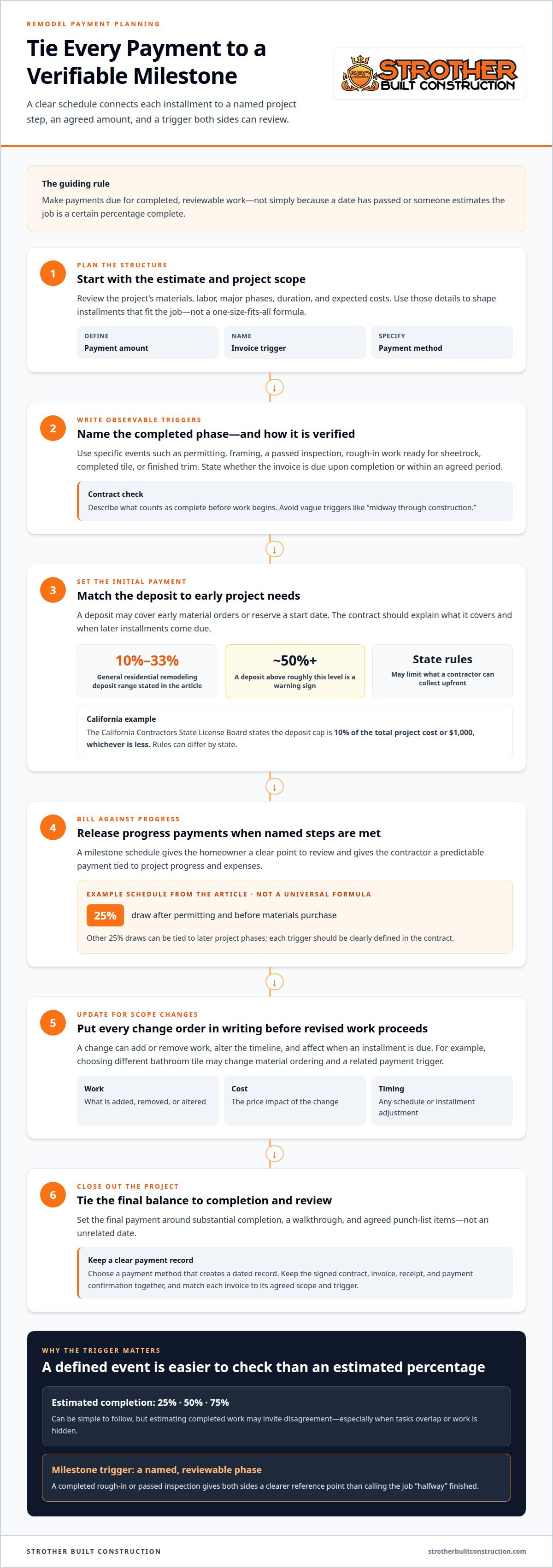
The fairest payment plan doesn’t ask you to pay simply because time has passed. A home remodeling payment schedule should tie each installment to a specific, verifiable project milestone, with the amount and payment trigger written into the contract. That way, you can see what each payment covers.
It’s reasonable to expect progress before releasing more money, while a contractor needs predictable payments to keep materials and work moving. A schedule based on completed, reviewable milestones makes those expectations clearer than billing against an estimated percentage of work.
Here, you’ll learn how deposits, progress payments, and final payments can fit different project scopes, and why milestone billing gives you a clearer reference point. You’ll also see what to put in writing about payment amounts and due dates, how to handle the final walkthrough, and how a change order can affect an installment’s cost and timing. When those terms are defined upfront, it’s easier to understand what’s due and when as your remodel takes shape.
Table of Contents
Question: Why not have percentage payments due based on percentage of work done instead of milestones driven installment payments?
Billing at 25%, 50%, and 75% completion can sound straightforward, but estimating the work completed may invite disagreement. Milestones give each installment a defined event both sides can review.
Milestone-Based Installments
Milestone-based installments are triggered when a named project phase is complete, rather than when someone estimates that a certain share of the work is done. For homeowners, the payment trigger is easier to identify and compare with the contract. A completed rough-in or passed inspection is a clearer reference point than a judgment that the job is “halfway” finished.
A schedule might tie a payment to a specific phase, such as completed rough-in work that is ready for sheetrock. The contract should identify the milestone and amount due, keeping payment connected to progress.
Milestone Construction Billing
Milestone construction billing organizes invoices around defined project events, such as permitting, framing, or inspections. One example schedule uses a 25% draw after permitting and before materials purchase, then ties other 25% draws to later project phases. Those triggers help distinguish a completed step from a calendar date alone.
This clarity helps homeowners understand what each installment supports, while giving contractors predictable cash flow for project expenses and subcontractors. Use specific descriptions in the contract, not broad labels such as “midway through construction.”
Time-based completion schedules use percentages such as 25%, 50%, and 75% of total work as payment thresholds. They can be simple to follow, but judging work percentage may be difficult when construction tasks overlap or some phases remain hidden. For example, visible progress may not show whether rough electrical and plumbing have passed inspection.
A milestone-based home remodeling payment schedule replaces subjective estimates with observable triggers. Homeowners can review a defined completed step before paying, while contractors can plan installments around project progress. Neither approach automatically suits every job. The contract should state each payment amount, its trigger, and how the milestone will be verified, so both sides understand what counts as complete before work begins.
How Do Change Orders Fit Into the Schedule?
A change order can add or remove work or alter the project timeline. For example, choosing different bathroom tile may affect material ordering and when a related installment is due. Before the revised work proceeds, record the change, its cost impact, and any schedule adjustment in writing. This keeps payment terms aligned with the agreed renovation scope.
A deposit should reflect early project needs, such as ordering materials, rather than serve as an unexplained large advance. Residential remodeling deposits generally fall in the 10% to 33% range, though state rules may limit what contractors can collect upfront. A deposit above roughly 50% is a warning sign. The right amount depends on the project’s early expenses and applicable state requirements.
According to the California Contractors State License Board, California law caps a contractor's deposit at 10% of the total project cost or $1,000, whichever is less. Rules can differ by state, so location matters before you agree to deposit terms. A deposit may also reserve a start date or cover early material orders, but the contract should explain what it covers and when the remaining installments come due.
What payment methods offer protection for home remodeling projects? Choose a method that creates a dated record, and keep the signed contract, invoice, receipt, and payment confirmation together. These documents show the amount paid and the milestone or change order it relates to.
How can homeowners verify a remodeling contractor before making payments? Compare the contractor’s name and license details with the relevant state licensing authority, and make sure the contract names the same business. Before sending funds, match each invoice to the agreed scope and payment trigger.
Set the final payment around substantial completion, a walkthrough, and agreed punch-list items, rather than an unrelated date. For a bathroom renovation, written scope and change terms help keep installments aligned with the work; explore bathroom remodeling as you plan the project.
What Are Standard Contractor Payment Schedule Options?
A typical schedule combines an initial payment, progress installments, and a final balance. The project estimate, duration, and work phases help determine which structure fits.
Start with the estimate’s cost breakdown. Identify materials, labor, and each major phase, then match installments to expected costs. The contract should state each payment’s percentage or amount, invoice trigger, and payment method. Compare the estimate with actual progress as work advances. If an addition changes the scope, document its cost and update the schedule before billing for it.
Project Phases and Deadlines
Phases and deadlines are the defined work stages and target dates that determine when installments become due. A schedule might connect payments to a rough-in inspection, completed tile, and finished trim. Set a clear trigger for each phase, then specify whether the invoice is due upon completion or within an agreed period. This distinguishes a verified project milestone from a calendar date that arrives before the work is ready.
Payment Timing for Short Projects
For short projects, payment timing often depends on how quickly the work can be completed and reviewed. A job lasting less than a week may use one payment upon completion, while straightforward work taking a few days may use a deposit and final balance. A small job lasting a day or two may be paid at the end. Matching the structure to the timeline avoids unnecessary invoices for brief work.
Payments at Project Commencement
A commencement payment is an installment due when the project starts, as defined in the contract. One sample schedule allocates 10% at signing, followed by payments at later work stages. The agreement should explain what this first payment covers, such as early project needs, and distinguish signing from the actual start date. That distinction helps prevent confusion if preparation begins before onsite work.
Predictable installments also support project cash flow and planned payments to subcontractors. For a longer renovation, weekly or biweekly billing may suit the work; milestone invoices may fit better when inspections or material deliveries define progress. Tie each invoice to the estimate and a stated trigger, so homeowners can connect payment timing to completed work.
Handling requests to change the payment schedule
A request to change payment timing can affect both the contract and the work sequence. Treat it as a written change, not an informal adjustment during a kitchen renovation.
What contract terms should a remodeling payment schedule include? State the project scope, each payment amount or percentage, its triggering event, the payment method, and the time allowed after invoicing. Explain how approved changes affect the price, milestones, and schedule.
Change Orders and Payment Disputes
A change order records an agreed adjustment to the work and explains its effect on payment. This matters because a verbal request to move plumbing during framing can leave the homeowner and contractor with different expectations.
Before revised work begins, write down what is added or removed, its cost impact, and any change to payment timing. Keep the signed change order with the original contract and related invoices. If a disagreement arises, those documents show which work and payment terms both parties accepted.
Payment Terms for Change Orders
Change-order payment terms specify when added or revised work becomes payable. This prevents an extra installment from appearing without a clear trigger or connection to the changed scope.
For example, a change order adding kitchen cabinets can identify the revised work, added cost, and whether payment is due before materials are ordered or after installation. The contract should explain whether the change affects an existing phase or creates a separate payment milestone.
Keep the revised schedule aligned with the work. If a change delays an inspection, the next payment trigger may need to move with that phase. If the homeowner removes a finish item, update the scope and related amount instead of leaving the original invoice unchanged. A dated, signed record gives both sides a shared reference for the revised agreement.
Don’t approve payment changes based only on an onsite conversation. Ask for the written change order and revised terms before the affected work proceeds. Compare the change with the original contract, then keep the approval, invoice, and proof of payment together. This simple recordkeeping step clarifies how added work relates to the next installment.
For a remodel where design choices and construction phases evolve together, discuss your remodeling plans and the scope you want to shape.
Strother Built Construction: Kitchen Remodeling
Strother Built Construction can help plan a kitchen remodel around your goals, scope, and project phases. A clear payment schedule belongs alongside those decisions, with installments tied to defined work and written terms.
Turn to Strother Built Construction when you’re planning a kitchen update and want remodeling work and design decisions considered together. Architectural Design services can support a broader renovation plan, while Bathroom Remodeling and Basement Remodeling can help transform other areas of your home.
As you prepare, outline the changes you want and your questions about payment milestones. This gives you a practical starting point for discussing the project scope and schedule.
Contact Strother Built Construction to discuss your remodeling plans, or visit strotherbuiltconstruction.com.
Turn Your Remodeling Plans Into a Clear Next Step
Treat payment terms as part of the planning conversation, not paperwork to leave until the project is about to begin. A home remodeling payment schedule works best when it reflects the work you want completed and gives both sides a shared reference as decisions take shape. Bring your priorities, questions, and ideas for the space into the discussion.
Whether you’re considering a kitchen refresh, bathroom update, or more functional basement, Strother Built Construction can help you explore the right remodeling direction. A thoughtful conversation about the project scope can also clarify how its phases and payment terms fit together.
Take the next step at your pace. Contact Strother Built Construction to discuss your remodeling plans and move toward a space that feels right for your home.
Frequently Asked Questions
What Is a Fair Payment Schedule for a Home Renovation or New Build?
A fair schedule matches payments to project needs and verifiable work, rather than requiring the full amount upfront. For example, a payment might follow delivery of special-order materials, with later installments tied to completed phases. The contract should also explain how invoices are submitted and what happens if an inspection or material delivery shifts the planned sequence.
Should Homeowners Pay a Deposit for Work?
A deposit can be reasonable when it covers a clear early project need, such as ordering materials or reserving a place in the work schedule. The contract should state its amount and purpose, and explain how it applies to the total balance. Deposit limits differ by state, so the applicable rules depend on where the property is located.
Why Are Construction Payment Schedules Important?
A written schedule helps homeowners plan household finances around construction invoices. It also creates a shared record of what each installment covers, which can help distinguish an approved expense from an unexpected request. For example, compare an invoice with the contract phase it identifies before adding it to your project budget.
Should I Issue Final Payment Prior to Completion?
Generally, tie final payment to the agreed completion terms rather than paying before the work is finished. Walk through the space, compare the completed work with the contract scope, and note any remaining agreed items in writing. For example, record a missing trim piece or paint touch-up so the final accounting reflects the work still due.
What Happens if My Builder Asks Me to Bend the Payment Schedule?
Pause before changing the arrangement, then ask for the reason and revised terms in writing. Compare the request with the current contract and identify whether it relates to a changed scope, a new material order, or a timing issue. Keep the original schedule and any revised agreement together, so later invoices can be matched to the terms you accepted.
What Is a Typical Payment Schedule for a Home Remodeling Project in the U.S.?
There’s no single percentage plan for every U.S. remodel. A longer project may use an initial deposit, progress installments tied to stages such as rough-in or finish work, and a final payment after review. A short job may instead use a deposit and completion payment. For projects in Des Moines, Ankeny, Waukee, or nearby communities, the scope and sequence determine which schedule fits.



Comments