


Choosing Bathroom Tile for Resale: A Practical 2026 Guide

Updated: Oct 5
Choosing bathroom tile for resale doesn’t mean settling for a bland bathroom. A bold pattern or personal favorite can make the space feel like yours, but it may also make it harder for future buyers to picture their own style there. Aim for a bathroom that feels fresh and thoughtfully designed without asking the tile to do all the talking.
Weigh appearance against everyday upkeep, durability, and the scope of your renovation. The right choice depends on where the tile will go, how much care it needs, and whether its color and scale suit the rest of your home. For homeowners coordinating broader interior projects directly with contractors to reduce overhead—a model detailed at directrenovationcontractor.com.sg—managing scope and surface choices early helps keep both budgets and timelines in check. A practical, neutral foundation can still feel warm and distinctive through texture, layout, and carefully chosen accents.
This guide compares tile materials and finishes, explores colors and patterns with broad appeal, and explains the tradeoffs to consider in a bathroom. You’ll also learn how to bring tile into a cohesive plan that fits your home and local market. Looking at each finish as part of the whole room, rather than as a sample on its own, makes it easier to plan a result that works.
Table of Contents
Choosing Bathroom Tile for Resale Starts with Buyer Appeal
A resale-minded bathroom should feel intentional, not designed for just one buyer’s taste. That doesn’t mean removing all character. Choose tile that supports a welcoming, well-cared-for room and gives future buyers room to imagine their own finishing touches.
Tile shapes first impressions, but it doesn’t determine a sale on its own. Buyers also notice the bathroom’s layout, overall condition, lighting, fixtures, and how the space relates to the rest of the home. Even attractive tile can feel out of place if it clashes with nearby rooms or draws attention to worn surfaces. Resale outcomes depend on the property and local market, so treat broad appeal as a design goal, not a promise of a particular return.
For a Des Moines-area home, consider its architectural style and compare your plans with similar nearby properties. Homes in Des Moines, Ankeny, West Des Moines, Waukee, Altoona, Polk City, Bondurant, Grimes, Ames, Huxley, Norwalk, and Indianola can vary in style and condition. Don’t assume one tile choice will suit every home or buyer. A cohesive update that respects the home’s character is a strong starting point.
What makes bathroom tile feel broadly appealing?
Build around a balanced palette, a restrained pattern, and finishes that work with permanent fixtures such as the tub, shower, and vanity. A simple field tile across the main surfaces can create a calm foundation, while a smaller accent area adds personality without making the entire room feel highly specific. For background on the material and its different forms, see ceramic tile basics.
Timeless choices don’t have to be plain or colorless. A distinctive color or trend can suit the home and still appeal to buyers, especially when used thoughtfully. The tradeoff is that a strong pattern or highly recognizable look may be harder for someone else to picture in their own bathroom. Consider how easily the design will work with different towels, accessories, and paint colors.
How much should resale influence your tile decision?
Start with three questions: How soon might you sell? Does the bathroom need a broader update, or is tile the main concern? How much do you want to enjoy the room while you still live there? If selling soon is a priority, favor a cohesive, adaptable look. If your plans are further out, weigh that flexibility against the comfort and style you’ll appreciate day to day.
A focused tile refresh addresses a specific surface or design issue. A full bathroom remodel may involve coordinating tile with layout, fixtures, lighting, and storage. Keep the scope aligned with the home and your plans. For guidance on a broader project, explore the Des Moines bathroom remodeling guide.
Compare Bathroom Tile Materials, Finishes, and Grout Before You Choose
Material is only one part of a tile decision. The tile’s composition, surface finish, size, placement, and grout all affect how the bathroom looks and how much care it may need. When choosing bathroom tile for resale, compare the specific product and intended location rather than relying on a material name alone.
Tile body refers to the tile’s underlying material and composition. Surface finish is the visible texture or treatment on its face, such as matte or polished. Grout fills the joints between tiles, shaping the overall pattern and adding another surface to clean and maintain.
Ceramic, porcelain, or natural stone: what changes for homeowners?
Ceramic and porcelain are manufactured products, while natural stone has variation formed in the material itself. That affects the look, but it doesn’t make one option the universal winner. Review the product’s installation and care guidance for the specific area, especially where water exposure and cleaning routines matter. The Tile Council of North America (TCNA) offers tile-industry resources that can help homeowners understand installation considerations.
Consistency helps a room feel planned. A floor, shower surround, and vanity area don’t need identical tile, but coordinating color, finish, or scale can tie them together. For example, pair a quieter main tile with a restrained accent rather than introducing several competing patterns.
How tile size, surface, and grout shape the finished room
Large tiles create fewer visible joints, while smaller tiles create a more detailed rhythm. Either can work in a compact or spacious bathroom. Consider how the pattern meets edges, corners, and fixtures. In wet areas, check the product’s slip-resistance information and ratings for the intended use rather than assuming a finish is suitable based on appearance alone.
Grout can blend with the tile for a quieter surface or contrast with it to emphasize the layout. Its color also affects how joints look as they collect soil or change with use, so consider both appearance and upkeep. If the bathroom update is part of a larger project, learn about bathroom remodeling planning with Strother Built Construction.
Does Bathroom Tile Really Help a Home Sell? Weigh the Tradeoffs
Attractive tile alone doesn’t guarantee a higher sale price or a faster sale. It can help a bathroom feel cared for and visually consistent, but buyers’ responses depend on the whole property, its condition, and local market expectations. Treat tile as one part of the home’s presentation, not a stand-alone investment with a promised return.
That distinction matters when choosing bathroom tile for resale. A thoughtful update can address a worn or distracting surface and help the room feel cohesive. An extensive renovation, however, may go beyond what makes sense for the home or likely buyers. Before settling on the scope, review comparable homes and current local market context. In the Des Moines area, focus on properties similar in style, condition, and price range rather than assuming one finish suits every buyer.
Where tile can strengthen a bathroom’s first impression
Clean, coordinated surfaces can make a bathroom appear maintained and help its finishes feel like they belong together. Damaged tile, visibly worn grout, or surfaces that clash may draw attention during a showing, even if the room functions well. Addressing those distractions can improve the overall impression, but it doesn’t establish a specific increase in value. Zillow’s discussion of return on your investment offers broader context for evaluating a bathroom project financially.
Think about the room as a buyer might experience it: Does the tile work with the fixtures and the rest of the bathroom? Does its condition appear consistent with the home? These are useful planning questions, not guarantees of how a buyer will respond.
When a full tile replacement may not be the right move
If existing tile is sound and the rest of the bathroom is in good condition, replacing it solely to follow a trend may not be the best use of renovation effort. A limited refresh may make more sense when the concern is confined to one surface. However, replacing only a shower wall, for example, can leave an awkward transition if its color, scale, or finish doesn’t connect with the floor or surrounding surfaces. Plan the visible boundaries, not just the tile being changed.
Compare the proposed work with the bathroom’s overall condition and the likely expectations for similar homes. If the project involves more than tile, the home remodeling resale-value guide can help you think through renovation priorities. A well-proportioned update should suit the property, support daily use, and avoid over-improving beyond its context. For property investors managing turnkey rental makeovers, firms such as De Rent Company - Aveyron Rénovation emphasize this exact principle by aligning renovation scope with practical market returns.
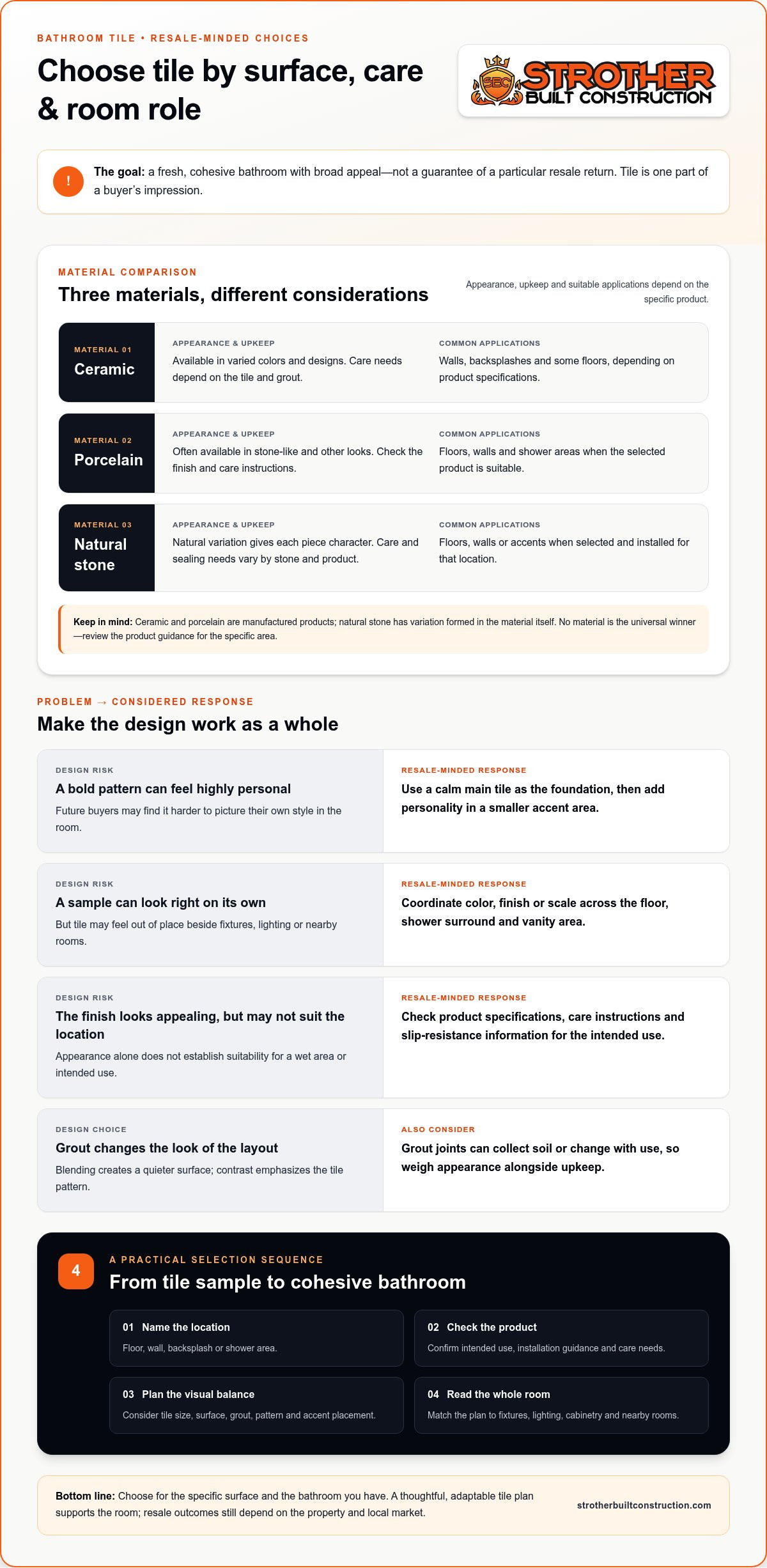
Use This Checklist to Choose Resale-Friendly Bathroom Tile
Make the decision in a practical order. Start with your plans and the bathroom’s needs, then narrow the design and verify that the tile suits its intended location. This keeps choosing bathroom tile for resale grounded in the home itself, not in a trend assumed to appeal to every buyer.
1. Set your timeline and assess the bathroom. Consider when you may sell, the room’s condition, and whether the tile is damaged, dated, or still working well. Decide whether the project is a repair, a refresh, or a full bathroom renovation before comparing materials.
2. Define the scope and local context. Choose the surfaces that need attention and how the change should fit the home. In Des Moines, Ankeny, West Des Moines, Waukee, Altoona, Polk City, Bondurant, Grimes, Ames, Huxley, Norwalk, and Indianola, compare similar local properties by style, condition, and price range. Use them to understand context, not to assume one regional tile preference.
3. Shortlist styles that suit the architecture. Consider colors, patterns, and materials alongside the home’s character. Keep the overall design cohesive, and check how the tile will work with existing fixtures, cabinetry, lighting, and finishes in adjacent rooms.
4. Check product details and upkeep. Review the tile’s specifications, care instructions, finish, size, and intended installation location. Confirm that products selected for wet areas are suitable for that use, and check available slip-resistance information. Consider whether the surface and grout will fit your regular cleaning routine.
5. Review samples and the complete design. Look at samples in the bathroom’s lighting, beside the vanity, fixtures, and any finishes planned for the renovation. Check how the shower tile relates to the floor, how the grout will look between pieces, and where transitions will fall at edges and thresholds.
A tile sample can look different under warm vanity lights than it does in a showroom. View it at different times of day if the room has natural light, and compare more than one sample together. This gives you a clearer sense of color, texture, and pattern before the design is set.
For larger changes involving layout, fixtures, or other bathroom finishes, use the Des Moines bathroom remodeling guide as a broader planning resource. For a cohesive renovation shaped around your home and goals, read about bathroom remodeling with Strother Built Construction.
Plan a Cohesive Bathroom Tile Remodel with Strother Built Construction
Tile has the most impact when it belongs to a larger plan. A sample that looks appealing on its own still needs to work with the bathroom’s layout, fixtures, lighting, storage, and nearby rooms. Thinking through those connections early helps the finished space feel considered rather than assembled from separate choices.
Why tile works best as part of the whole bathroom design
Compare tile samples beside the vanity finish, countertop, plumbing fixtures, and paint or wall finishes. Consider how the room’s lighting changes the tile’s color and texture, and how its size and pattern will meet corners, thresholds, and other surfaces. These details can shape both the overall look and the renovation scope.
Resale priorities matter, but so do the bathroom’s functional needs and your enjoyment of it today. A design-and-construction perspective connects those goals: tile selection can be considered alongside layout, lighting, and storage rather than treated as an isolated finish. Careful planning and coordination help bring the choices together into a polished room.
Strother Built Construction brings bathroom remodeling together with architectural and interior design services. The locally owned company serves Des Moines and nearby communities, including Ankeny, West Des Moines, Waukee, Altoona, Polk City, Bondurant, Grimes, Ames, Huxley, Norwalk, and Indianola. Its team helps homeowners plan renovations around their homes, existing conditions, and goals. The focus is a cohesive project, not a promise of a particular resale result.
Take the next step toward a resale-conscious bathroom update
Before planning, note when you hope to sell, what needs attention, and whether you’re considering a focused tile update or a broader remodel. List the fixtures and finishes you plan to keep, what isn’t working in the room, and the colors or materials you’re drawn to. This gives the design conversation a clear starting point.
Choosing bathroom tile for resale is easier when the tile supports the whole bathroom and fits your renovation priorities. The bathroom remodeling information from Strother Built Construction can help you consider the project as a whole.
Make a Confident Plan for Your Bathroom Update
Choosing bathroom tile for resale is about more than picking a neutral color. Consider the material’s care needs, the tile’s intended location, and how its finish works with the rest of the room. A cohesive update can support a well-maintained impression, but tile alone can’t guarantee a higher sale price. Let your selling plans, the bathroom’s condition, and comparable homes help guide the scope.
Keep the design connected to the home, and weigh resale priorities alongside the comfort and style you want to enjoy now. Strother Built Construction combines bathroom remodeling with integrated architectural and interior design services, helping homeowners plan tile as part of the full space. The award-winning general contractor is locally owned and operated by Josh Strother.
Ready to plan a bathroom update around your home and goals? Explore bathroom remodeling with Strother Built Construction.
Frequently Asked Questions
Does bathroom tile increase a home's resale value?
Bathroom tile may contribute to a positive impression, but it doesn’t guarantee a higher sale price. Buyers see the room as a whole, including its layout, condition, lighting, fixtures, and how it fits the home. A clean, cohesive update can help the bathroom feel cared for, while the financial outcome depends on the property and local market. Compare similar homes before deciding how much to renovate.
What bathroom tile is best for resale?
The best choice is tile that suits the bathroom, works for its intended location, and feels consistent with the home’s style. When choosing bathroom tile for resale, consider a restrained main pattern, a color that coordinates with permanent fixtures, and product-specific care and installation instructions. Ceramic, porcelain, and natural stone can all work in the right setting. Compare their appearance and maintenance needs rather than choosing by material name alone.
Should I choose neutral bathroom tile before selling?
Neutral tile is a practical option if broad buyer appeal is a priority, but it isn’t the only appropriate choice. Soft whites, light grays, warm beige, and muted earth tones can create a flexible backdrop. A restrained accent can add character without dominating the room. Consider your home’s architecture, existing finishes, and nearby rooms, then view samples in the bathroom’s lighting before settling on a palette.
Is porcelain or ceramic tile better for a bathroom remodel?
Neither is automatically better for every bathroom. Compare the specific products’ appearance, care requirements, installation guidance, and suitability for the planned location. A ceramic tile may fit a particular wall or floor design, while a porcelain option may offer the look and specifications you want elsewhere. For either material, check the manufacturer’s instructions, especially for wet areas, and coordinate selections across the room for a consistent finish.
What color bathroom tile is most appealing to homebuyers?
No single color appeals to every buyer, but soft whites, off-whites, light grays, greige, taupe, and warm beige are flexible choices that can work with varied decor. Muted blue or green can add color as a limited accent. Match tile to the bathroom’s permanent finishes and the home’s overall character. A sample viewed beside the vanity and under the room’s lighting gives a more useful impression than a showroom display.
Are large-format bathroom tiles a good choice for resale?
Large-format tile can create a clean, continuous look and generally means fewer grout joints across a surface. It may suit a spacious floor or a shower wall, but the room’s dimensions, edges, layout, and product specifications matter. Check that the selected tile is intended for its location, including wet areas, and consider how cuts and transitions will appear. A well-planned layout matters as much as tile size.
Should bathroom floor and shower tile match?
No, floor and shower tile don’t have to be identical. They can feel coordinated through a shared color, finish, or overall style, while different sizes or patterns help distinguish each surface. Consider how the tiles meet at transitions and whether the grout supports a unified look. For homeowners in Des Moines, Ankeny, West Des Moines, Waukee, Altoona, Polk City, Bondurant, Grimes, Ames, Huxley, Norwalk, and Indianola, local home styles and comparable properties can help inform the overall design.

Comments