


Cost of DIY Bathroom Remodel vs. Professional: How to Compare in 2026

Updated: Oct 5
What if the bathroom remodel that looks cheaper on paper ends up costing more in time, tools, or repairs? The cost of DIY bathroom remodel vs professional work isn’t just a comparison of labor saved against a contractor’s bill. Materials, equipment, your available time, and the risk of redoing plumbing or waterproofing all shape the total cost.
It can make sense to take on some work yourself. Painting, replacing simple fixtures, or assembling a vanity may suit a capable homeowner. But work behind the walls or beneath the tile calls for specialized skills, and a small mistake can affect the durability of the whole room. Just as high-spec projects rely on dedicated commercial tiling contractors london to execute flawless substrate preparation and alignment, domestic wet areas require technical craftsmanship to avoid moisture failure.
This guide compares costs, timelines, and trade-offs to help you choose an approach. You’ll see which updates may be manageable as DIY, where professional expertise can help coordinate the work, and how to account for surprises uncovered during demolition. With a clear plan, you can balance your budget with a bathroom that works well and holds up over time.
Table of Contents
DIY Bathroom Remodel vs. Professional: What Should You Compare?
DIY vs. Professional Bathroom Remodel Cost: Where the Money Goes
Which Bathroom Remodel Tasks Are Realistic to DIY: And Which Carry More Risk?
How to Choose a DIY, Professional, or Hybrid Bathroom Remodel
Plan a Professional Bathroom Remodel with Strother Built Construction
DIY Bathroom Remodel vs. Professional: What Should You Compare?
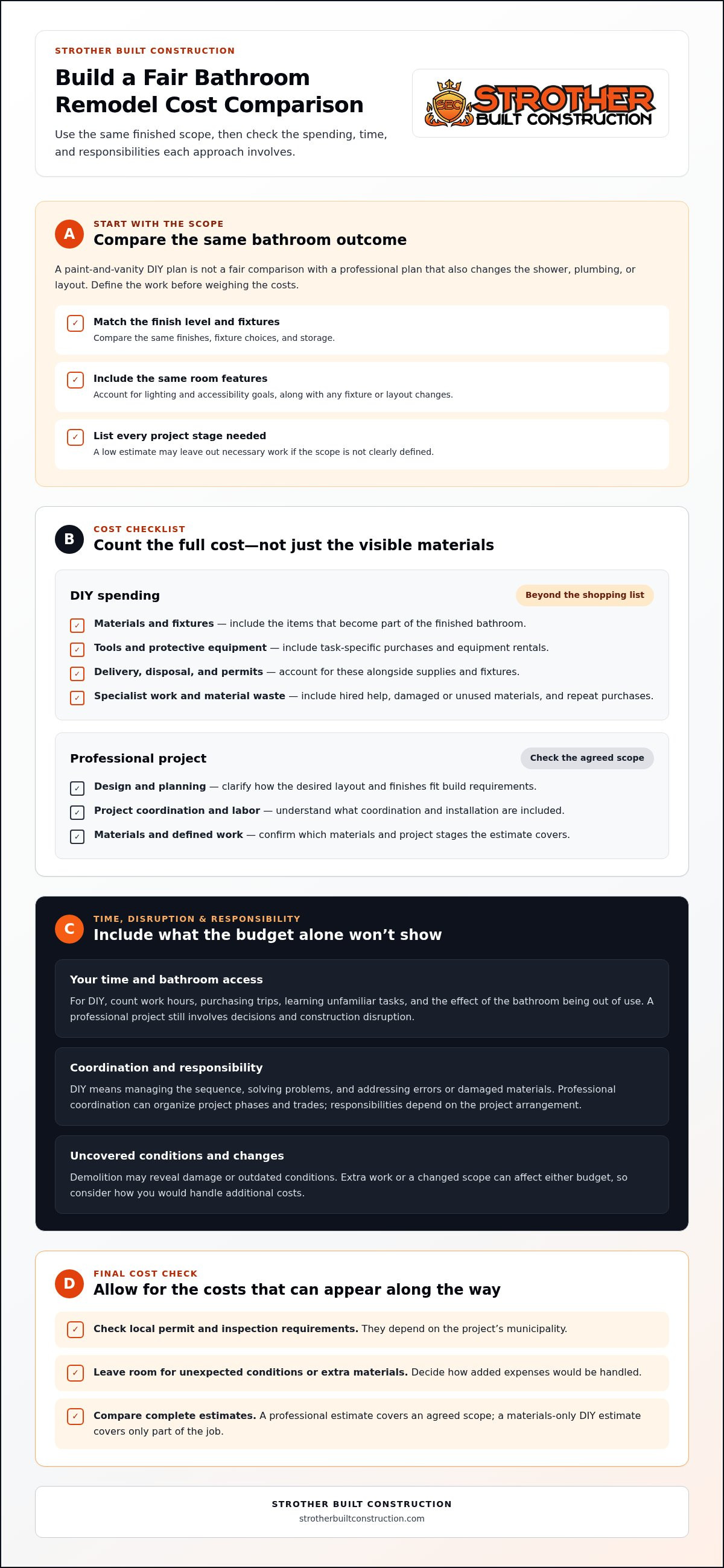
Doing some work yourself can reduce paid labor, but planning, materials, and risk remain part of the project. To compare the cost of DIY bathroom remodel vs professional work fairly, start with the same desired result. A DIY plan for new paint and a vanity isn’t comparable to a professional plan that also changes the shower, plumbing, and layout.
Set the scope before comparing options. Include the same finishes, fixtures, storage, lighting, and accessibility features, along with every stage needed to install them. A renovation can range from surface updates to more extensive changes; the general overview of Renovation offers useful context for thinking about that range.
What counts as the same bathroom remodel scope?
Separate cosmetic updates from work that changes fixtures, plumbing, or the room’s layout. Repainting walls while keeping the existing tub and vanity is a different scope from replacing fixtures or relocating a shower. Compare like with like: the same finish level, fixture choices, storage, lighting, and accessibility goals. Existing water damage or other concealed conditions can also change what the room needs. Until the work is defined, a low estimate may simply leave out necessary stages.
Why the lowest upfront budget may not be the lowest total cost
DIY spending can grow beyond the first materials list. You may need tools or rentals, pay for delivery and disposal, allow for material waste, or make repeat purchases when measurements or cuts are off. Your time counts too: planning, learning unfamiliar tasks, and fitting work around home and job responsibilities all take effort. If you hire specialists for separate tasks, you’ll also manage their schedules and the order in which the work needs to happen.
Labor avoided is not automatically money saved. Compare what you’ll buy, the time and disruption you’ll take on, and the cost and effort of correcting problems. Match those factors to the same finished scope before deciding which approach makes sense.
DIY vs. Professional Bathroom Remodel Cost: Where the Money Goes
A useful budget compares every cost needed to reach the same finished bathroom, not a professional project scope against a DIY shopping list. DIY spending can include materials and fixtures, task-specific tools, protective equipment, rentals, delivery, disposal, permits, and any specialist work you hire. A professional project may include design, project coordination, labor, materials, and the agreed scope of work.
Neither approach eliminates the possibility of surprises. Demolition may uncover damage or outdated conditions that require additional work, and changes to the original scope can affect either budget. Permit and inspection requirements depend on the project’s municipality, so verify what applies to your home instead of assuming requirements are identical throughout the Des Moines area.
DIY costs beyond materials and supplies
Look beyond the items that stay in the room. A tile saw or other task-specific tool, protective gear, equipment rentals, delivery charges, disposal, and unused or damaged materials can all add to DIY spending. Include shopping trips, returns, time spent learning unfamiliar tasks, and the effort of coordinating specialty work. Add a contingency line for unexpected conditions or extra materials, and decide how you would handle the added expense if it comes up.
The long-term decline in the DIY share discussed by Harvard’s Joint Center for Housing Studies offers broader context for homeowners weighing hands-on work against hiring professionals. Your decision still depends on your project, skills, available time, and budget.
What professional project coordination contributes
A professional estimate covers an agreed project scope; a materials-only DIY estimate covers only part of the job. Use the worksheet below to build a more complete comparison. Fill in each amount from your own plans rather than relying on broad local averages.
To see how design and construction can come together for a project, explore bathroom remodeling in Des Moines.
Which Bathroom Remodel Tasks Are Realistic to DIY: And Which Carry More Risk?
Choose tasks by more than how easy they look in a video. Consider the skill and tools required, how much room there is for error, and what a mistake could affect. A finish flaw may be frustrating; a failure behind a wall or below a shower can affect safety, surrounding materials, and the room’s durability. These differences matter when weighing the cost of DIY bathroom remodel vs professional work.
Lower-complexity work a capable homeowner may consider
Painting or changing simple hardware may suit a homeowner with the right preparation and experience. Follow product instructions, protect nearby finishes, and measure carefully. Removing an accessory may also be manageable, provided it does not connect to plumbing or wiring and removal won’t damage a concealed or delicate surface.
Cosmetic work still calls for care. Preparation, clean edges, accurate placement, and protection of floors and fixtures all affect the final look. If you’re unsure what’s behind an accessory or whether a finish is suitable for a bathroom, pause and find out before proceeding.
Work where mistakes can affect safety or durability
Waterproofing requires consistent, careful execution. Gaps, poorly sealed transitions, or missed details can allow moisture to reach areas that aren’t meant to get wet. A surface may look finished while concealing a problem, so this work requires close attention to the full system and its installation instructions. For critical wet spaces like tubs and showers, many homeowners choose to partner with dedicated specialists like Remarkable Installations to ensure lasting moisture protection.
Plumbing changes, electrical work, and structural modifications carry different risks and may involve safety, inspection, or code considerations. They can also affect surrounding finishes and other project stages. Don’t assume that being comfortable with basic repairs means you’re equipped for work inside walls or near water and electrical systems.
Skill: Have you completed similar work accurately before?
Tools: Do you have the right equipment and know how to use it safely?
Error impact: Would a mistake affect appearance alone, or could it lead to water intrusion, damage, or a safety issue?
Dependencies: Could the task affect plumbing, wiring, structure, or the next stage of work?
Requirements depend on the type of work and the municipality. Before beginning work that may require a permit or inspection, verify the rules that apply to your specific location in Iowa. Don’t assume nearby municipalities follow identical procedures. For complex work, professional construction coordination can connect design choices with build requirements and help organize project stages.
How to Choose a DIY, Professional, or Hybrid Bathroom Remodel
The right approach depends on more than the cost of DIY bathroom remodel vs professional work. Your available time, access to another bathroom, comfort with disruption, and the project’s complexity all matter. Use this sequence to choose a plan that fits your home and skills.
Define the scope. List what you want to change, from finishes and storage to fixtures, layout, and lighting. Keep the desired result consistent as you compare approaches.
Assess your skills and tools. Be honest about which tasks you can complete safely and to the finish standard you expect. Factor in learning time and access to suitable equipment.
Identify dependencies. Map which tasks must happen before others. For a hybrid project, decide who handles each discrete task and agree on the handoff, timing, and finish expectations before work begins.
Compare time and disruption. Consider your household schedule, how long you can manage limited bathroom access, and whether you can pause or adjust your plans if a task takes longer than expected.
Choose the approach that fits. DIY, professional construction, or a clear split between the two can make sense, depending on the scope and your capacity to manage the work.
When a DIY or hybrid scope may fit
When professional coordination may better fit the project
Multiple trades, layout changes, or possible concealed conditions can make a project harder to sequence. Design and construction planning can connect how the bathroom should look and function with the work required to build it. That coordination can be especially useful when finishes, fixtures, and layout choices depend on one another.
For homeowners in Des Moines and nearby Iowa communities, a coordinated plan can help organize the project around the home’s needs. Explore the Des Moines home remodeling buying guide for broader planning context.
If you’re considering a coordinated bathroom remodel, learn about bathroom remodeling with Strother Built Construction.
Plan a Professional Bathroom Remodel with Strother Built Construction
Choosing between DIY and professional construction comes down to the full project, not just paid labor compared with store receipts. Include materials, tools, time, coordination, disruption, and the possibility of additional work if conditions change. The cost of DIY bathroom remodel vs professional work is most useful as a comparison when both paths aim for the same scope, function, and finish level.
For some homeowners, handling a few suitable tasks is a good fit. For others, bringing design and construction together can make a more involved remodel easier to plan. The right choice depends on your bathroom, priorities, and how much project responsibility you want to take on.
What a coordinated design-and-construction approach can address
Layout, material selections, storage, lighting, and everyday function all influence one another. A design choice can also affect how the work needs to be built and sequenced. Strother Built Construction combines bathroom remodeling with architectural and interior design services, connecting the look and use of a room with construction planning.
A coordinated plan gives homeowners a shared way to work through choices and project stages, particularly when multiple trades or layout decisions are involved. It brings project decisions into a plan so the scope and priorities can guide the work.
Start with your goals, scope, and priorities
Before discussing a remodel, write down what matters most. Separate must-haves from features you’d consider if the scope allows. Think about how the bathroom is used each day, what isn’t working now, and which finishes or functions you’d like to change. A clear starting point makes it easier to talk through design direction and project needs.
Everyday needs: Identify what would make the bathroom more useful for your household.
Scope: Note whether you’re considering cosmetic updates, fixture changes, or a new layout.
Priorities: List preferred finishes and the improvements you value most.
Strother Built Construction serves Des Moines and nearby Iowa communities, including Ankeny, West Des Moines, Waukee, Ames, and Norwalk. Whether you’re planning a focused update or a broader transformation, start with your goals and the scope you have in mind. Explore bathroom remodeling with Strother Built Construction.
Choose the Right Path for Your Bathroom
The best remodel plan starts with a fair comparison: match the scope and finishes, then account for materials, tools, time, coordination, and the risks of rework. The cost of DIY bathroom remodel vs professional work depends on what the project involves and which tasks you can confidently complete.
A hybrid approach may fit a focused update, while complex changes can benefit from coordinated design and construction. Strother Built Construction is locally owned and operated by Josh Strother, an award-winning general contractor. Integrated architectural and interior design services support bathroom remodeling by connecting layout and finish choices with construction planning.
Ready to discuss your goals, scope, and priorities? Plan your bathroom remodel with Strother Built Construction.
Frequently Asked Questions
How much does a DIY bathroom remodel cost compared with hiring a professional?
There’s no reliable cost comparison without a defined project scope. A DIY budget should include materials, tools, rentals, delivery, disposal, permits if applicable, specialist work, and your time. A professional estimate should reflect its stated design, coordination, labor, materials, and included work. Compare the same fixtures, finishes, and project stages, then account for concealed damage or scope changes that could affect either approach.
Is it cheaper to remodel a bathroom yourself?
It can be cheaper if you already have the skills and tools, complete the work properly, and avoid costly rework. But the cost of DIY bathroom remodel vs professional work isn’t just materials versus labor. Rentals, wasted supplies, extra shopping trips, your time, and hiring specialists can narrow the difference. A smaller cosmetic refresh may be more manageable than a project involving plumbing, electrical, or layout changes.
Can I remodel a bathroom myself and hire professionals for plumbing or electrical work?
Yes, a hybrid plan can divide work between you and professionals. You might handle suitable finish tasks while hiring specialists for plumbing or electrical work. Define who is responsible for each task, what must be completed first, and how one stage hands off to the next. Confirm applicable local requirements for the work. Clear sequencing helps prevent DIY tasks from delaying or interfering with technical work.
What bathroom remodel tasks are safest to do yourself?
Painting, simple hardware changes, and removing accessories may be reasonable DIY tasks if you have the necessary skills and prepare carefully. Follow product instructions, protect nearby surfaces, and measure before installing anything. Before removing an accessory, make sure it isn’t connected to plumbing or wiring and won’t expose or damage concealed surfaces. Cosmetic work still takes patience, and a rushed finish can affect the room’s appearance.
What happens if a DIY bathroom remodel has a plumbing or waterproofing mistake?
A plumbing error can cause leaks or damage to surrounding materials, while a waterproofing failure may let moisture reach areas that should stay dry. Some problems aren’t visible as soon as the work is finished. Stop using the affected area if you suspect an active leak, limit further exposure to water, and arrange appropriate professional assessment and repairs. Fixing the source and any resulting damage may require additional work.
Do I need a permit to remodel a bathroom in Des Moines, Iowa?
Permit needs depend on the work and the municipality, so don’t assume every bathroom update requires the same approvals. Before starting, verify current requirements with the building department for the property’s location. This matters in Des Moines and nearby communities such as Ankeny, West Des Moines, Waukee, Altoona, Polk City, Bondurant, Grimes, Ames, Huxley, Norwalk, and Indianola. Requirements can differ between cities and by project scope.
How long does a DIY bathroom remodel take compared with a professional remodel?
There’s no dependable timeline that fits every bathroom. A DIY project may stretch out as you fit work around other responsibilities, learn unfamiliar tasks, source materials, or coordinate specialty work. A professional schedule depends on the project scope, work sequence, material availability, and conditions uncovered during construction. Compare realistic schedules for the specific job, and consider how long your household can manage limited bathroom access.
Is a hybrid DIY and professional bathroom remodel worth considering?
A hybrid remodel can make sense when you have time and suitable skills for clearly defined tasks but want professional help coordinating more technical or connected work. Decide who handles each part, when it happens, and what finish standard it must meet before work begins. For homeowners in the Des Moines area, integrating design decisions with construction planning can help keep layout, function, and finishes aligned.

Comments