


Home Remodel Warranty: What to Look For Before You Sign

A warranty’s headline length tells you less than the fine print that assigns responsibility. If you’re searching for “home remodel warranty what to look for,” start by separating the contractor’s workmanship warranty from manufacturer warranties on products and materials. They cover different things, and a separate home warranty is another type of service contract altogether. Knowing which document applies can help you understand where to turn if an issue appears after your kitchen, bathroom, basement, or whole-home remodel is complete.
Before work begins, get clear on what each document covers, what it excludes, and who handles a reported problem. Don’t assume a defect or component is covered just because it’s part of the project. Use this checklist to review coverage, claim deadlines, and required records. You’ll also learn how to document a concern and report it according to the warranty’s instructions. With responsibilities and next steps spelled out in writing, you can start your remodel with clearer expectations.
Table of Contents
Home Remodel Warranty Basics: What Protection Usually Covers
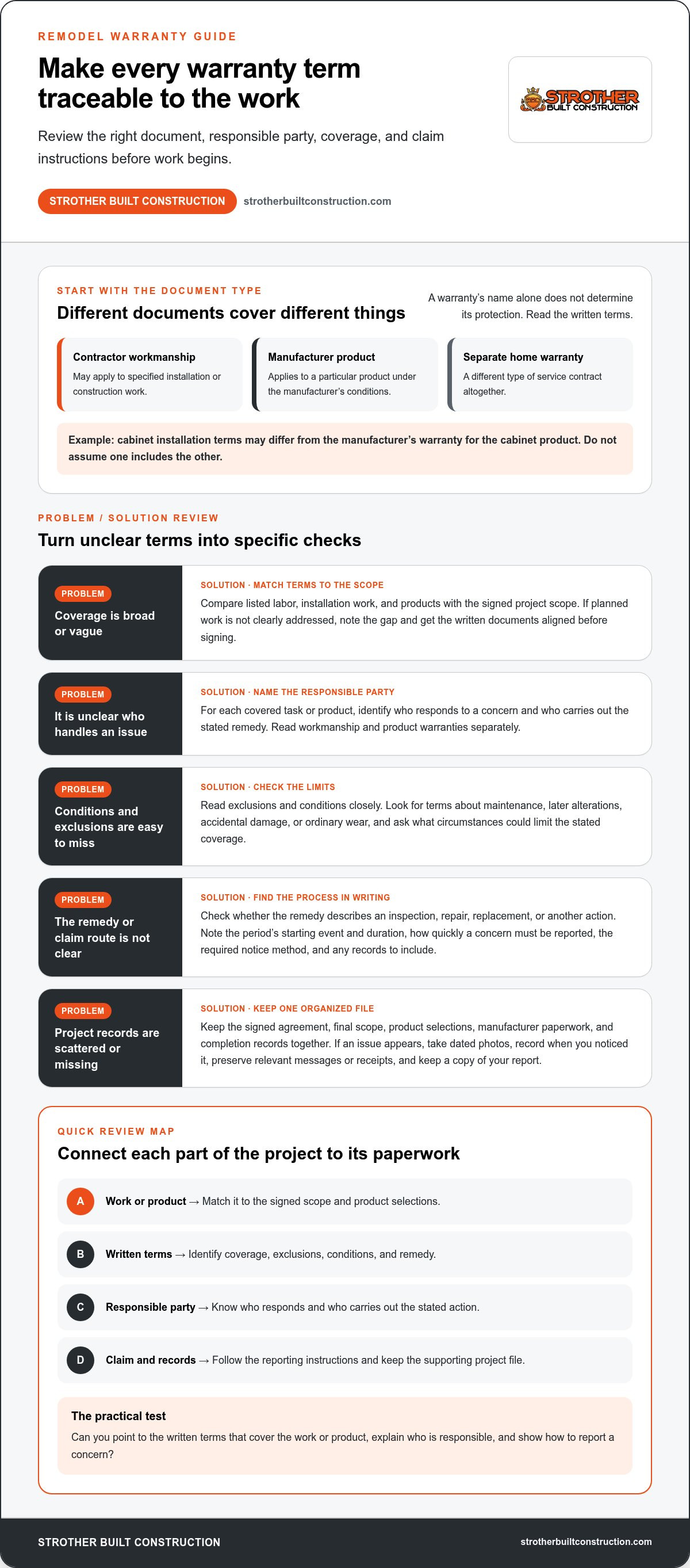
A remodel warranty is a set of written terms describing which work or products receive protection, what remedy may be available, and what conditions apply. Details vary by project and document, so don’t rely on a label or verbal summary. If you’re researching home remodel warranty what to look for, begin by identifying who is responsible for each part of the work and which written terms govern it.
A contractor’s workmanship coverage and a manufacturer’s product warranty address different things. The first may apply to specified installation or construction work; the second applies to a particular product under the manufacturer’s conditions. A warranty’s name alone does not determine its protection; the written terms do. For a foundational overview of what a warranty is, including express and implied warranties, see Wikipedia. For your remodel, focus on the signed agreement, project scope, and relevant product documents.
Workmanship warranty versus manufacturer warranty
Take cabinetry as an example. A contractor’s workmanship terms may describe coverage for specified aspects of cabinet installation, while the manufacturer’s warranty may address the cabinet product itself. The documents can have different coverage, conditions, and claim processes. Read each one separately and note which party is responsible for responding to a concern. Don’t assume product coverage automatically includes installation, or that installation coverage includes the product.
Why project scope changes the warranty conversation
A bathroom renovation might include tile, plumbing fixtures, cabinetry, and installation work. A whole-home remodel can involve many more areas, products, and types of construction. The documents may not address the same work or carry identical terms. A clear written scope connects each warranty to the specific work and selected products it covers.
Match the warranty paperwork to the project description and product selections. If the scope identifies a particular fixture or installation task, the related documents should show where its terms are found and what conditions apply. This gives you a practical starting point for reviewing home remodel warranty what to look for before signing, without assuming that every part of a remodel receives the same protection.
What to Look for in a Home Remodel Warranty Document
Read the written terms alongside the proposal and project scope. Connect each covered task or product to a responsible party, a stated remedy, and clear instructions for raising a concern. For homeowners asking home remodel warranty what to look for, a useful review goes beyond the coverage label: check what the document actually says and whether it matches the planned work.
Coverage, exclusions, and responsibilities
Look for specific descriptions of the labor, installation work, and products addressed. Read the exclusions and conditions just as closely. A document may address maintenance, later alterations, accidental damage, or ordinary wear; the wording determines how those terms apply. Check whether the stated remedy involves an inspection, repair, replacement, or another action, and note who is responsible for carrying it out.
Covered work: Match the listed tasks to the signed scope, such as installation or finish work.
Covered products: Identify the products named and keep their separate warranty paperwork.
Exclusions: Turn each condition into a practical question: what circumstances could limit the stated coverage?
Remedy and responsibility: Find out what response the document describes and who handles it.
Don’t treat a broad phrase as a substitute for details. If the proposal describes work that the warranty document doesn’t clearly address, note the gap before signing and get the written project documents aligned.
Dates, deadlines, and claim instructions
Find the event that starts the applicable period, such as a date identified in the document, and note the duration stated there. Check how quickly a concern must be reported, the required notice method, and any records a claim must include. The FTC guide to home warranties offers consumer context on warranty terms; your project’s written documents set out the terms relevant to your remodel.
Keep the signed agreement, final scope, product selections, manufacturer paperwork, and completion records together in one secure place. If an issue appears, take dated photos, write down when you noticed it, and preserve relevant messages or receipts. Follow the document’s reporting instructions and keep a copy of what you submit. An organized file makes it easier to explain what happened and connect the concern to the right project record.
Before signing, compare the warranty with the proposal line by line. Clear design, product, and construction documents help keep expectations aligned throughout a remodel. Integrated architectural and interior design planning can help organize project decisions from the start.
Remodel Warranty Red Flags: Terms That Deserve a Closer Read
A long-sounding warranty can inspire confidence, but duration alone doesn’t tell you how broad the protection is or how straightforward a claim may be. Ask whether the terms clearly connect covered work, conditions, responsibility, and next steps. When considering home remodel warranty what to look for, pay close attention to wording that leaves you guessing about what happens if a concern comes up.
Usable warranty protection depends on a readable scope, clear conditions, and workable claim steps. Watch for reassuring phrases that don’t identify the work or products they apply to. Look for a stated remedy and claim process, too. If the warranty doesn’t explain how to report an issue, what information to provide, or who responds, its headline duration may not answer the questions that matter.
Ambiguous language and broad exclusions
Terms like “defective work” or “normal conditions” can be difficult to apply if the document doesn’t explain what they mean. Read exclusions alongside the covered-work description, not in isolation. For example, an exclusion related to later alterations may matter differently depending on which work is covered. Exclusions aren’t automatically improper, but you should understand their practical effect. For legal interpretation of a clause, consult a qualified legal professional.
Use a simple test: can you point to a specific task or product and find the language that describes its coverage, limits, and remedy? If the answer depends on assumptions, mark the wording for clarification before signing. Missing claim instructions deserve the same attention as vague coverage. The document should make the reporting process understandable, even if each warranty has different steps.
Unclear responsibility for products and installation
Product concerns and installation concerns may be addressed in separate documents. Check whether the project paperwork distinguishes between the tile itself and the work of installing it—or in exterior remodeling, between specialized siding materials and installation craftsmanship. Specialized contractors such as Advantage Plus Construction Group illustrate the importance of pairing manufacturer material warranties with dedicated workmanship coverage. Keep the product paperwork with the remodel documents, and note any separate instructions for documenting or submitting a concern. This doesn’t predict whether a particular issue will be covered; it helps you identify which terms and records may be relevant.
Before signing, compare the warranty with the proposal and scope. Note undefined terms, broad exclusions, unclear responsibility, or missing instructions, then get clear written wording for anything you don’t understand. A careful review can prevent confusion later and keep expectations aligned with the project documents.
A Home Remodel Warranty Checklist for Des Moines-Area Homeowners
A clear records trail connects your remodel’s written promises to the work and products in your home. Use this checklist from proposal review through closeout. It can help you organize documents for a kitchen, bathroom, basement, or whole-home project in Des Moines, Ankeny, West Des Moines, Waukee, Altoona, Polk City, Bondurant, Grimes, Ames, Huxley, Norwalk, or Indianola, without assuming every warranty uses the same terms. For more planning context, explore this Des Moines home remodeling buying guide.
Before work begins: align the paperwork
Review the documents as a set, rather than as separate promises. For design-led projects, connect planning decisions and construction expectations through architectural design services in Des Moines.
Read the proposal and scope. Make sure the listed work describes the areas, tasks, and products included in your project.
Match product selections to warranty paperwork. Check that product descriptions align across the scope, selections, and manufacturer documents.
Compare warranty terms with the scope. Note any work or products that are described differently or aren’t easy to connect to the written terms.
Write down key details. Keep relevant contacts, reporting methods, start dates, notice deadlines, and homeowner responsibilities together. Follow the documents’ wording rather than assuming when a time period begins.
Resolve unclear points in writing. Keep the final signed versions so you can refer to the agreed scope and terms later.
At project closeout: build a useful records file
When the work is complete, gather the final paperwork while project details are fresh. Keep digital copies in a clearly labeled folder and store important originals safely.
Save the complete project record. Include the signed agreement, final scope, product paperwork, approved changes, completion records, and care instructions.
Photograph completed work. Keep dated images that show the finished areas and selected products.
Record later concerns. If you notice an issue, note the date and what you observed, and take clear photos. Avoid altering or discarding relevant records.
Keep claim communications together. Review the written reporting process, follow its instructions, and retain copies of notices and responses.
This simple system makes paperwork easier to follow from planning through closeout. If you’re preparing for a remodel, explore remodeling planning with Strother Built as you organize your project expectations.
Plan a Remodel with Clear Expectations from Design Through Construction
A remodel takes shape through connected decisions: what the project includes, which products you select, how the design serves your home, and how the work moves into construction. Keeping those decisions aligned makes it easier to compare the written scope with warranty documents. It won’t prevent every issue, but it gives you a clearer record of what was planned and what the project includes.
How planning supports clearer project expectations
Start with the goals for your space, then translate them into defined project details. In a kitchen remodel, that might mean coordinating cabinetry and finish selections with the work described in the scope. For a basement or whole-home project, it may mean organizing expectations across several rooms and types of work. Specific descriptions help you see how the planned work, selected products, and written terms relate.
Architectural and interior design decisions also inform construction planning. Considering these elements together helps keep design choices, product selections, and project documents connected as plans develop. Strother Built brings architectural design and interior design services into its remodeling work, supporting projects from kitchens and bathrooms to basements and whole homes. Clear coordination helps organize decisions, though it isn’t a promise against defects or disagreements.
Turn the checklist into a confident next step
Carry four priorities into planning: a clearly written scope, a distinction between workmanship and manufacturer warranties, exclusions you understand, and an organized project record. Keep approved changes with the signed documents so the paperwork reflects the work as it evolves. Before work begins, make sure the descriptions and responsibilities are understandable.
That preparation can make the warranty conversation more useful. Instead of relying on a headline or general assurance, you’ll have a defined project to compare with the written terms. If a question comes up later, organized records can help you find the relevant scope, product information, and instructions.
Planning a remodel in Des Moines or a nearby community? Bring your ideas and priorities to a thoughtful conversation with Strother Built Construction. Whether you’re considering a kitchen, bathroom, basement, or whole-home transformation, clear planning is a steady place to begin.
Move Forward with Clear Remodel Expectations
A useful remodel warranty is about more than a long coverage period. Read the written scope, distinguish workmanship terms from manufacturer warranties, and make sure exclusions and claim steps are understandable. Keep product selections, approved changes, and project records together so you can find the details that matter later.
With the question of home remodel warranty what to look for in mind, clarity starts before construction. A well-organized plan connects design decisions, selected products, and the work described in writing. It also gives you a stronger foundation for discussing expectations throughout your project, without assuming every warranty covers the same things.
Strother Built Construction is locally owned and operated by Josh Strother, an award-winning general contractor offering integrated architectural and interior design services. If you’re considering a kitchen, bathroom, basement, or whole-home remodel in the Des Moines area, take the next step with a clear vision and thoughtful planning. Plan your next home remodeling project with Strother Built, and move toward a space that feels right for your home.
Frequently Asked Questions
What should a home remodel warranty cover?
A home remodel warranty should spell out which work or products it addresses, who is responsible, what remedy may be available, and what conditions apply. Workmanship terms and manufacturer product warranties are separate documents with different purposes. For homeowners asking “home remodel warranty what to look for,” review the scope, exclusions, start date, duration, and claim instructions, then compare them with the signed proposal and product selections.
How long should a workmanship warranty last for a home remodel?
There’s no single duration that applies to every remodeling project. A typical builder-warranty structure may use one year for workmanship and materials, but that’s a reference point, not a promise or universal standard for remodels. Read the written terms to find the applicable period, when it begins, and which work it covers. Make sure the duration and coverage are clear before signing the project agreement.
Does a manufacturer warranty cover remodeling labor?
Usually, a manufacturer warranty addresses the specified product, not the labor to install it. Its terms may set separate conditions for coverage and claims. For example, paperwork for a cabinet product may differ from the contractor’s written terms for cabinet installation. Keep both documents, identify which party each one addresses, and follow the relevant instructions if a concern comes up. Don’t assume one warranty replaces the other.
What is usually excluded from a home renovation warranty?
Exclusions depend on the written terms. They may address maintenance, later alterations, accidental damage, or ordinary wear, if those conditions are stated. Read each exclusion alongside the description of covered work to understand its practical effect. An exclusion isn’t automatically improper, but unclear wording deserves attention. If you need a legal interpretation of a clause, consult a qualified legal professional rather than relying on a general explanation.
What happens if I find a problem after a remodel is complete?
Check the written warranty and project agreement for the reporting deadline, notice method, and information to provide. Record when you noticed the issue, take dated photos, and gather relevant project documents and messages. Report it according to the stated instructions and keep copies of your communication. The documents determine which terms apply and what steps come next; finding a problem doesn’t by itself establish whether it’s covered.
Can a home remodel warranty transfer to a new owner?
It depends on the warranty’s written terms, so don’t assume coverage transfers automatically when a home is sold. Look for language about transferability, any required notice or paperwork, and the deadline for completing those steps. Product manufacturers may set separate transfer conditions in their own documents. Keep the agreement and product paperwork available so a future owner can review the terms and any stated transfer process.
How do I make a warranty claim after a remodeling project?
Follow the claim instructions in the applicable written warranty. Note the issue and when it appeared, take dated photos, and gather the signed scope, product paperwork, and relevant completion records. Submit the required notice by the stated method and deadline, then keep copies of what you send and receive. This organized approach can help homeowners in Des Moines, Ankeny, West Des Moines, Waukee, Altoona, Polk City, Bondurant, Grimes, Ames, Huxley, Norwalk, and Indianola track the process.


Comments